Mastering QuEChERS Extraction: Advanced Techniques for Pesticide Analysis in Complex Environmental Samples
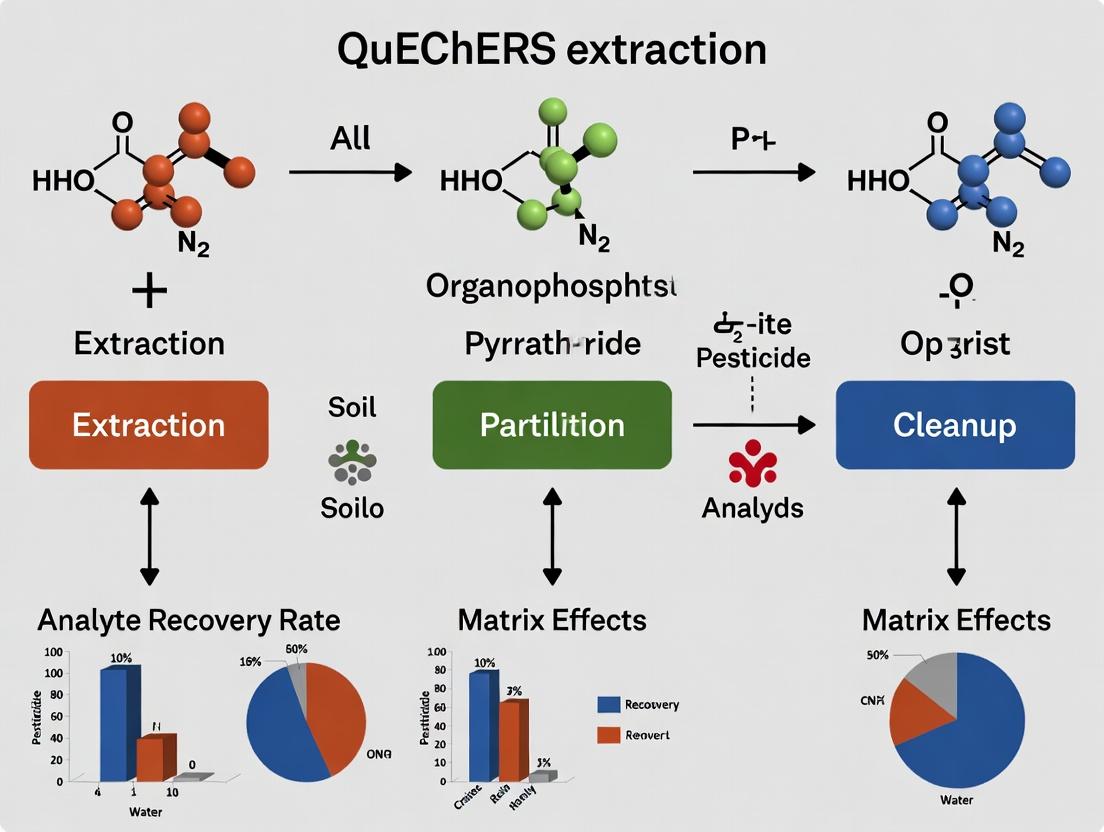
This comprehensive article provides researchers, scientists, and analytical professionals with an in-depth guide to QuEChERS (Quick, Easy, Cheap, Effective, Rugged, and Safe) extraction for pesticide residue analysis in diverse environmental...
Mastering QuEChERS Extraction: Advanced Techniques for Pesticide Analysis in Complex Environmental Samples
Abstract
This comprehensive article provides researchers, scientists, and analytical professionals with an in-depth guide to QuEChERS (Quick, Easy, Cheap, Effective, Rugged, and Safe) extraction for pesticide residue analysis in diverse environmental matrices. Beginning with fundamental principles and the evolution of the methodology, we explore its core chemical mechanisms and advantages over traditional techniques like solid-phase extraction (SPE). The article systematically details optimized protocols for challenging matrices including soil, water, sediment, and biota, addressing recent modifications for polar and multi-residue analysis. Critical troubleshooting sections cover common challenges such as matrix effects, low recovery, and interference management. Finally, we examine validation parameters per international guidelines (SANTE, AOAC, EPA) and comparative performance against other extraction methods. This guide serves as both a practical manual and a strategic reference for implementing robust, reliable pesticide monitoring in environmental research and regulatory compliance.
QuEChERS 101: Understanding the Core Principles and Evolution for Environmental Pesticide Analysis
QuEChERS, an acronym for Quick, Easy, Cheap, Effective, Rugged, and Safe, is a streamlined sample preparation methodology that has fundamentally transformed analytical chemistry, particularly in multi-residue pesticide analysis. Within the broader thesis context of QuEChERS extraction for pesticide analysis in environmental matrices (e.g., soil, water, sediment, biosolids), its significance lies in enabling high-throughput, reliable monitoring of environmental pollutants. This article details its application and protocols for such research.
The QuEChERS Acronym in Practice
The acronym precisely defines the method's advantages in an environmental research setting:
- Quick: Reduces sample preparation from hours to minutes.
- Easy: Involves minimal steps (extraction/partitioning and dispersive-SPE cleanup).
- Cheap: Uses inexpensive, reusable materials and minimal solvent.
- Effective: Delivers high recoveries (70-120%) for a broad analyte range.
- Rugged: Tolerates variations in matrix composition (critical for diverse environmental samples).
- Safe: Minimizes use of hazardous solvents versus traditional methods.
| Parameter | Original QuEChERS (AOAC 2007.01) | Modified for Environmental Matrices (e.g., Soil) | Purpose of Modification |
|---|---|---|---|
| Extraction Solvent | Acetonitrile (ACN) | Acetonitrile with 1% Acetic Acid | Improves extraction efficiency for basic pesticides; aids in breaking soil-analyte bonds. |
| Buffering Salt | MgSO₄ + NaCl | MgSO₄ + NaOAc (Sodium Acetate) | NaOAc buffers at ~pH 4.8, stabilizing acid-sensitive pesticides crucial in environmental analysis. |
| Cleanup sorbent (d-SPE) | Primary: PSA, C18, MgSO₄ | Common Adds: GCB (for pigments), SAX (for acidic co-extractives) | Removes specific interferents (humic acids, fulvic acids, chlorophyll) from complex environmental matrices. |
| Typical Sample Mass | 10-15 g (food) | 5-10 g (soil/sediment) | Accounts for higher analyte concentration and heterogeneity in environmental solids. |
| Water Addition | Often none (inherent in food) | Up to 10 mL deionized water | Necessary to hydrate and efficiently extract analytes from dry, solid environmental samples. |
| Key Application | High-moisture foods | Soils, sediments, sludge, plant matter | Tailored for matrices with high organic content and complex interferences. |
Detailed Experimental Protocol for Soil Analysis
Title: QuEChERS Extraction and Cleanup for Pesticide Residues in Soil.
I. Materials & Equipment
- Soil sample (air-dried, sieved to <2 mm)
- Homogenizer (e.g., vortex, shaking mill)
- Centrifuge (capable of 4500 rpm)
- Analytical balance
- Calibrated pipettes (1 mL, 5 mL, 10 mL)
- 50 mL centrifuge tubes (PTFE-lined caps)
- QuEChERS Extraction Salts: 4 g MgSO₄, 1 g NaCl, 1 g NaOAc (or commercial kit).
- QuEChERS d-SPE Cleanup Tubes: 150 mg MgSO₄, 25 mg PSA, 25 mg C18, (optional: 10 mg GCB).
- Solvents: Acetonitrile (HPLC grade), Acetic Acid (≥99%), Deionized water.
- Internal Standard Solution: Prepared in acetonitrile.
II. Procedure A. Extraction & Partitioning
- Weigh 5.0 ± 0.1 g of prepared soil into a 50 mL centrifuge tube.
- Spike with appropriate internal standard (e.g., Triphenyl phosphate or deuterated analogues).
- Add 10 mL of deionized water. Vortex for 30 seconds to hydrate.
- Add 10 mL of acetonitrile with 1% acetic acid.
- Shake vigorously by hand or on a horizontal shaker for 1 minute.
- Immediately add the extraction salt packet (4 g MgSO₄, 1 g NaCl, 1 g NaOAc).
- Seal the tube and shake vigorously for 1 minute to prevent salt clumping.
- Centrifuge at ≥4500 rpm for 5 minutes to achieve clear phase separation. The acetonitrile layer (top) is the raw extract.
B. Dispersive-SPE Cleanup
- Transfer 1 mL of the upper acetonitrile extract into a d-SPE cleanup tube (e.g., containing MgSO₄/PSA/C18/GCB).
- Vortex for 30-60 seconds to ensure complete interaction with sorbents.
- Centrifuge at ≥4500 rpm for 5 minutes.
- Carefully collect the supernatant.
- Filter through a 0.22 µm PTFE or nylon syringe filter into an autosampler vial for analysis by LC-MS/MS or GC-MS/MS.
Visualizing the QuEChERS Workflow for Environmental Matrices
Title: QuEChERS Workflow for Soil Pesticide Analysis
The Environmental Scientist's QuEChERS Toolkit: Key Reagent Solutions
| Item | Function in Environmental Analysis |
|---|---|
| Anhydrous Magnesium Sulfate (MgSO₄) | Primary drying salt; generates heat upon hydration, aiding extraction efficiency and drives phase separation. |
| Sodium Acetate (NaOAc) | Buffering salt; maintains pH at ~4.8 during extraction, stabilizing acid-labile pesticides prevalent in environmental monitoring. |
| Primary Secondary Amine (PSA) | d-SPE sorbent; removes polar organic acids, sugars, and fatty acids; crucial for minimizing matrix effects from soil organic matter. |
| C18 (Octadecylsilane) | d-SPE sorbent; removes non-polar interferents like lipids and sterols, which can be present in biosolids or plant-containing matrices. |
| Graphitized Carbon Black (GCB) | d-SPE sorbent; removes planar molecules like chlorophyll and pigments (from plant debris in soil) and some humic substances. |
| Acetonitrile with 1% Acetic Acid | Extraction solvent; acetic acid protonates basic pesticides, improving recovery, and helps disrupt soil-analyte interactions. |
| Internal Standard Mix (Deuterated/Surrogate Pesticides) | Added before extraction; corrects for analyte loss during sample preparation and instrument variability, ensuring data accuracy. |
The QuEChERS (Quick, Easy, Cheap, Effective, Rugged, and Safe) methodology, introduced by Anastassiades, Lehotay, Štajnbacher, and Schenck in 2003, revolutionized multi-residue pesticide analysis. Developed initially for high-moisture fruit and vegetable matrices, its core principle—salting-out liquid-liquid partitioning coupled with dispersive solid-phase extraction (d-SPE) cleanup—provided a paradigm shift from traditional, laborious techniques. Within environmental analysis research, the central thesis has been the adaptation and validation of this foundational protocol to complex, challenging environmental matrices (e.g., soil, sediment, water, biosolids) which present unique interferences not encountered in agricultural commodities. This document details the application notes and protocols tracing this evolution.
Quantitative Evolution: Key Methodological Modifications
Table 1: Core Evolution from Original QuEChERS to Environmental Adaptations
| Parameter | Anastassiades' Original Method (2003) | Typical Modern Environmental Adaptation (e.g., for Soil/Sediment) |
|---|---|---|
| Primary Matrix | High-water content crops (e.g., grapes, lettuce) | Soil, sediment, sludge, particulate-laden water |
| Sample Size | 10-15 g homogenized crop | 5-10 g dry-weight soil/sediment |
| Extraction Solvent | Acetonitrile (ACN) | Acetonitrile, often with acidification (e.g., 1% acetic acid) or acetone-ethyl acetate mixtures |
| Partitioning Salts | 4g MgSO₄, 1g NaCl | 4g MgSO₄, 1g NaCl, plus citrate buffering (AOAC 2007.01) or acetate buffering (EN 15662) for pH control |
| Cleanup (d-SPE) | 150 mg MgSO₄, 25 mg PSA | Enhanced sorbents: Often includes PSA, C18, GCB, and/or Z-Sep+. Amounts increased (e.g., 50 mg PSA, 50 mg C18, 150 mg MgSO₄). |
| Key Challenge Addressed | Sugars, fatty acids, organic acids | Humic/fulvic acids, pigments, sterols, complex lipids, inorganic particulates |
| Typical Analytes | ~200 Pesticides | 300+ Pesticides & emerging contaminants (e.g., pharmaceuticals, PFAS) |
Table 2: Performance Data Comparison for Select Matrices
| Matrix | Recovery Range (%) (Typical Pesticides) | RSD (%) | LOQ (µg/kg) | Key Modifications for Success |
|---|---|---|---|---|
| Lettuce (Original) | 70-120 (80% of compounds) | <10 | 10 | Basic protocol sufficient. |
| Agricultural Soil | 60-110 | 5-15 | 1-5 | Water addition (e.g., 10 mL), acidified ACN, citrate buffering, C18+PSA cleanup. |
| River Sediment | 50-95 | 8-20 | 0.5-5 | Freeze-drying, sand addition for grinding, GCB for pigment removal, Z-Sep+ for humics. |
| Wastewater Sludge | 40-90 (matrix-dependent) | 10-25 | 5-10 | Combined ultrasonication and shaking, solvent exchange post-extraction, EMR-Lipid d-SPE. |
Detailed Experimental Protocols
Protocol 3.1: Adapted QuEChERS for Pesticides in Agricultural Soils
Principle: This protocol modifies the original method using acetate buffering and enhanced d-SPE to co-extract a broad range of acidic, neutral, and basic pesticides while removing soil-derived co-extractives (humic substances, organic acids).
Materials & Reagents:
- Soil sample, sieved (2 mm), stored at -20°C.
- Acetonitrile, HPLC grade.
- Acetic acid, glacial.
- Magnesium Sulfate (MgSO₄), anhydrous, granular.
- Sodium Acetate (NaOAc), anhydrous.
- d-SPE tubes: 50 mg PSA, 50 mg C18, 150 mg MgSO₄.
- Internal Standard mix: Triphenyl phosphate (TPP), D₅-atrazine, etc.
Procedure:
- Weighing: Accurately weigh 5.0 ± 0.1 g of soil into a 50 mL centrifuge tube.
- Hydration: Add 10 mL of reagent water. Cap and vortex for 30 seconds.
- Internal Standard: Add 50 µL of appropriate internal standard solution.
- Extraction: Add 10 mL of acetonitrile with 1% acetic acid (v/v). Shake vigorously by hand for 1 minute.
- Salting-Out Partitioning: Immediately add extraction salt packet (containing 4g MgSO₄ and 1g NaOAc). Cap securely and shake vigorously for 1 minute.
- Centrifugation: Centrifuge at ≥4000 RCF for 5 minutes to achieve phase separation.
- Cleanup (d-SPE): Transfer 1 mL of the upper acetonitrile layer to a d-SPE tube (50 mg PSA/50 mg C18/150 mg MgSO₄). Cap and vortex for 30 seconds.
- Final Clarification: Centrifuge the d-SPE tube at ≥4000 RCF for 2 minutes.
- Analysis: Transfer the supernatant to an autosampler vial for analysis by LC-MS/MS or GC-MS/MS.
Protocol 3.2: Comprehensive Protocol for Pesticides in River Sediment
Principle: This robust protocol incorporates additional steps for drying, grinding, and utilizes a multi-sorbent d-SPE approach to handle high levels of pigments and humic acids.
Procedure:
- Sample Preparation: Freeze-dry wet sediment. Grind with anhydrous Na₂SO₄ (1:1 w/w) and a small amount of sand using a mortar and pestle.
- Weighing: Weigh 2.0 g of the homogenized dry mixture into a 50 mL tube.
- Extraction: Add 10 mL of acetonitrile:water:acetic acid (80:19:1, v/v/v). Sonicate in an ultrasonic bath for 10 minutes, then shake on a horizontal shaker for 15 minutes.
- Partitioning: Add salts (4g MgSO₄, 1g NaCl, 1g trisodium citrate dihydrate, 0.5g disodium hydrogen citrate sesquihydrate). Shake and centrifuge as in 3.1.
- Cleanup: Transfer 1.5 mL of extract to a d-SPE tube containing 25 mg PSA, 25 mg C18, 7.5 mg GCB, and 150 mg MgSO₄. Vortex and centrifuge.
- Filtration: Pass the supernatant through a 0.22 µm PTFE syringe filter prior to analysis.
Visualizations
Title: Evolution of QuEChERS for Environmental Matrices
Title: Soil QuEChERS Extraction & Cleanup Workflow
The Scientist's Toolkit: Key Research Reagent Solutions
Table 3: Essential Materials for Environmental QuEChERS Research
| Item | Function in Environmental Adaptation | Typical Specification/Note |
|---|---|---|
| Anhydrous MgSO₄ | Primary drying agent for salting-out; removes residual water from organic extract. | Must be high-purity, granular. Prevents clumping. |
| Primary-Secondary Amine (PSA) | d-SPE sorbent. Removes fatty acids, sugars, phenolic compounds. | Limited capacity for humics; amount increased for soil. |
| C18 (Octadecylsilane) | d-SPE sorbent. Removes non-polar interferences like lipids and sterols. | Critical for soil/sediment with high organic carbon content. |
| Graphitized Carbon Black (GCB) | d-SPE sorbent. Removes pigments (chlorophyll, carotenoids) and planar molecules. | Can adsorb planar pesticides; use cautiously. |
| Z-Sep+ (ZrO₂/SiO₂) | Mixed-mode sorbent. Specifically designed to remove phospholipids and humic/fulvic acids. | Highly effective for challenging matrices like sludge and sediment. |
| Citrate or Acetate Buffering Salts | Control pH during extraction (~5). Ensures stability of pH-sensitive pesticides (e.g., organophosphates). | AOAC (citrate) and EN (acetate) are two standard formats. |
| EMR-Lipid (Enhanced Matrix Removal) | "Selective" d-SPE sorbent. Size-exclusion based removal of lipids and humics with minimal pesticide loss. | Used for very fatty matrices or when analyzing a very broad analyte scope. |
| Internal Standard Mix | Corrects for matrix effects and losses during sample prep. Should be analyte surrogates. | Deuterated or ¹³C-labeled pesticides, or triphenyl phosphate. |
Within the context of QuEChERS (Quick, Easy, Cheap, Effective, Rugged, and Safe) extraction for pesticide analysis in environmental matrices, the tandem application of partitioning and dispersive Solid-Phase Extraction (d-SPE) is critical for achieving high analyte recovery with minimal co-extractive interference. This application note details the core chemical principles—polarity, solubility, and adsorption—that govern these sequential cleanup steps, providing optimized protocols for multi-residue analysis.
Core Chemical Principles
The QuEChERS workflow leverages two distinct chemical mechanisms in tandem:
- Partitioning: During the initial liquid-liquid extraction step, analytes are separated based on their differential solubility between two immiscible phases, typically water and acetonitrile. The addition of salts (e.g., MgSO₄, NaCl) induces phase separation via salting-out, forcing non-polar and medium-polarity pesticides into the organic layer.
- Dispersive SPE (d-SPE): Following partitioning, the acetonitrile extract undergoes a secondary cleanup via d-SPE. Here, primary-secondary amine (PSA), C18, and graphitized carbon black (GCB) sorbents are dispersed to adsorb interfering matrix components (e.g., fatty acids, sugars, pigments) based on polarity, size, and planar structure, leaving target analytes in solution.
Application Notes
Optimized QuEChERS Protocol for Soil and Water Samples
Objective: Extract and clean up >200 pesticide residues from complex environmental matrices.
Materials & Reagents:
- Sample: 10 g of homogenized wet soil or 10 mL of water.
- Extraction Solvent: Acetonitrile (ACN), 1% acetic acid.
- Partitioning Salts: 4 g MgSO₄ (drying agent), 1 g NaCl, 1 g sodium citrate tribasic dihydrate, 0.5 g sodium citrate dibasic sesquihydrate (AOAC 2007.01 formulation).
- d-SPE Sorbents: 50 mg PSA (removes sugars, fatty acids), 50 mg C18 (removes lipids), 10 mg GCB (removes pigments; use cautiously for planar pesticides).
- Internal Standards: Deuterated pesticide analogs added prior to extraction.
Protocol:
- Weigh 10 g sample into a 50 mL centrifuge tube. Spike with internal standards.
- Add 10 mL ACN (1% acetic acid). Shake vigorously for 1 minute.
- Add partitioning salt mixture. Immediately shake for 1 minute to prevent clumping.
- Centrifuge at ≥4000 RCF for 5 minutes for phase separation.
- Transfer 1 mL of the upper ACN layer to a 2 mL d-SPE tube containing sorbents (PSA/C18/GCB).
- Vortex for 30 seconds. Centrifuge at ≥4000 RCF for 2 minutes.
- Filter supernatant (0.22 µm PTFE) for LC-MS/MS analysis.
Performance Data (Recovery & Matrix Effects)
Table 1: Average Recovery (%) and Matrix Effect (%) for Pesticide Classes in Soil (n=5)
| Pesticide Class | Number of Analytes | Average Recovery (%) | RSD (%) | Average Matrix Effect (%) |
|---|---|---|---|---|
| Organophosphates | 45 | 94.2 | 6.8 | -12.3 |
| Pyrethroids | 25 | 88.5 | 9.2 | +18.7 |
| Triazoles | 20 | 102.1 | 5.1 | -8.5 |
| Carbamates | 18 | 96.7 | 7.4 | -5.9 |
| Neonicotinoids | 10 | 90.3 | 8.5 | +10.2 |
Table 2: d-SPE Sorbent Efficacy in Co-extractive Removal (Soil Extract)
| Matrix Interference | PSA (50mg) | C18 (50mg) | GCB (10mg) | Removal Efficiency* |
|---|---|---|---|---|
| Fatty Acids | High | High | Low | >95% |
| Sugars | High | Low | Low | >98% |
| Chlorophylls | Low | Moderate | High | >99% |
| Sterols | Moderate | High | Moderate | >90% |
*Estimated via reduction in LC-MS/MS background signal.
Experimental Workflow Diagram
Title: QuEChERS Partitioning and dSPE Tandem Workflow
The Scientist's Toolkit: Key Reagent Solutions
| Item & Typical Supplier | Function in Tandem Process |
|---|---|
| Acetonitrile (HPLC grade) e.g., Fisher Chemical, Honeywell | Primary extraction solvent. Miscible with water, excellent for medium-polar pesticides, and easily separated via salting-out. |
| Anhydrous Magnesium Sulfate (MgSO₄) e.g., Sigma-Aldrich | Key partitioning salt. Removes residual water via exothermic hydration, driving analytes into organic phase and improving recovery. |
| Primary-Secondary Amine (PSA) Sorbent e.g., Agilent Bondesil | d-SPE sorbent. Removes polar organic acids, sugars, and some pigments via weak anion exchange and hydrogen bonding. |
| Octadecylsilane (C18) Sorbent e.g., Supelclean LC-18 | d-SPE sorbent. Removes non-polar interferences (e.g., lipids, sterols) via reversed-phase hydrophobic interactions. |
| Graphitized Carbon Black (GCB) e.g., Envi-Carb | d-SPE sorbent. Removes planar pigments (chlorophylls, carotenoids) via π-π interactions; use sparingly to avoid analyte loss. |
| Citrate Buffering Salts e.g., NaCl, Na₃Citrate•2H₂O | AOAC buffering system. Maintains pH ~5.0-5.5, stabilizing pH-sensitive pesticides during partitioning. |
| Deuterated Internal Standards e.g., Cambridge Isotopes | Added before extraction. Corrects for analyte loss during partitioning and d-SPE, improving quantitative accuracy. |
Application Notes & Protocols
Protocol: Streamlined QuEChERS Extraction for Water Samples
Principle: This protocol leverages the Quick, Easy, Cheap, Effective, Rugged, and Safe (QuEChERS) approach for the multi-residue analysis of pesticides in surface water. It exemplifies the core advantages over traditional liquid-liquid extraction (LLE) or solid-phase extraction (SPE).
Materials:
- Sample: 15 mL of filtered environmental water sample.
- Reagents: Acetonitrile (ACN, LC-MS grade), Magnesium Sulfate (MgSO₄, anhydrous), Sodium Chloride (NaCl), Disodium Hydrogen Citrate Sesquihydrate, Trisodium Citrate Dihydrate.
- Centrifuge tubes: 50 mL conical tubes.
- Equipment: Vortex mixer, centrifuge capable of 4000 RCF, analytical balance, pipettes.
Procedure:
- Weighting: Accurately weigh 6 g of MgSO₄ and 1.5 g of NaCl into a 50 mL centrifuge tube.
- Addition: Add 15 mL of the water sample to the tube.
- Extraction: Add 15 mL of ACN. Cap the tube tightly.
- Shaking: Vortex vigorously for 1 minute. The exothermic reaction will occur.
- Centrifugation: Centrifuge at 4000 RCF for 5 minutes to achieve phase separation.
- Clean-up (Optional for complex matrices): Transfer 1 mL of the upper ACN layer to a d-SPE tube containing 150 mg MgSO₄, 50 mg PSA, and 50 mg C18. Vortex for 30 seconds and centrifuge.
- Analysis: Transfer the supernatant to an autosampler vial for direct analysis via LC-MS/MS.
Protocol: Comparative Soil Extraction: QuEChERS vs. Soxhlet
Principle: This protocol details the extraction of organochlorine pesticides from soil, comparing the modern QuEChERS method with the traditional Soxhlet extraction to highlight advantages in speed and solvent use.
Materials for QuEChERS:
- Sample: 10 g of homogenized, air-dried soil.
- Reagents: Acetonitrile:water (80:20, v/v) with 1% acetic acid, MgSO₄, NaCl, Sodium Acetate Trihydrate, PSA sorbent.
- Equipment: 50 mL centrifuge tube, vortex, centrifuge, mechanical shaker.
Procedure A (QuEChERS):
- Hydration: Place 10 g soil in a 50 mL tube. Add 10 mL deionized water. Vortex briefly.
- Extraction: Add 10 mL of ACN:water (80:20, 1% HAc). Add extraction salts (4 g MgSO₄, 1 g NaCl, 1 g NaOAc). Vortex for 3 minutes.
- Separation: Centrifuge at 4000 RCF for 5 minutes.
- Clean-up: Aliquot 6 mL of supernatant to a d-SPE tube with 900 mg MgSO₄ and 150 mg PSA. Shake for 1 minute and centrifuge.
- Analysis: Dilute and analyze.
Procedure B (Soxhlet - Traditional Control):
- Preparation: Load 10 g of soil into a cellulose thimble.
- Extraction: Assemble the Soxhlet apparatus with a 250 mL flask. Add 150 mL of acetone:hexane (50:50).
- Heating: Extract for 16-24 hours (typically 20 cycles).
- Concentration: Concentrate the extract to near dryness using a rotary evaporator.
- Reconstitution: Reconstitute in 2 mL ACN for analysis.
Data Presentation
Table 1: Quantitative Comparison of Extraction Methods for Pesticide Analysis
| Parameter | QuEChERS (Water) | Traditional LLE (Water) | QuEChERS (Soil) | Soxhlet (Soil) |
|---|---|---|---|---|
| Sample Amount | 15 mL | 1000 mL | 10 g | 10 g |
| Primary Solvent Volume | 15 mL ACN | 300 mL DCM | 10 mL ACN | 150 mL Acetone/Hexane |
| Extraction Time | 10 min | 60-90 min | 20 min | 16-24 hours |
| Avg. Cost per Sample (Reagents) | $4.50 | $18.00 | $6.00 | $32.00 |
| Avg. Recovery (%) | 85-110% | 70-105% | 80-105% | 75-110% |
| *Green Chemistry Score (AGP) | 0.61 | 0.15 | 0.55 | 0.08 |
Note: AGP = Analytical Greenness Calculator score (0=poor, 1=excellent). Data compiled from recent literature (2022-2024).
Table 2: Research Reagent Solutions Toolkit
| Item | Function in QuEChERS |
|---|---|
| Anhydrous MgSO₄ | Primary drying salt; removes residual water from the organic phase via exothermic reaction, improving partitioning. |
| Primary-Secondary Amine (PSA) Sorbent | Removes polar organic acids, sugars, and some pigments via hydrogen bonding and anion exchange. |
| C18 (Octadecylsilane) Sorbent | Removes non-polar interferences (e.g., lipids, sterols) via hydrophobic interactions. |
| Graphitized Carbon Black (GCB) | Removes planar molecules (e.g., chlorophyll, pigments); use sparingly as it can also adsorb planar pesticides. |
| Citrate or Acetate Buffering Salts | Stabilizes pH during extraction, crucial for acid-sensitive and base-sensitive pesticide recovery. |
| LC-MS Grade Acetonitrile | Primary extraction solvent; efficiently extracts a broad range of pesticides while limiting co-extraction of lipids. |
Mandatory Visualizations
Application Notes: Matrix-Specific Challenges in QuEChERS for Pesticide Analysis
The QuEChERS (Quick, Easy, Cheap, Effective, Rugged, and Safe) approach is widely adapted for pesticide multiresidue analysis in food, but its application to complex environmental matrices requires significant matrix-specific modifications. Each matrix presents unique physicochemical properties that affect extraction efficiency, matrix co-extractive interference, and final analytical sensitivity. The core challenge lies in balancing sufficient cleanup with comprehensive analyte recovery across diverse pesticide polarities and structures.
Soil
Soil is a heterogeneous matrix of inorganic minerals, organic matter (humic/fulvic acids), water, and air. The strong sorption of pesticides to organic carbon and clay minerals necessitates aggressive extraction. Variability in texture (sand, silt, clay) and pH drastically affects analyte binding. Aged residues bound to soil particles are particularly challenging.
Water
Though considered a "cleaner" matrix, water analysis requires sensitivity to part-per-trillion levels. Dissolved organic carbon, suspended solids, and salinity can cause matrix effects in LC-MS/MS. The main challenge is the preconcentration of large water volumes without losing volatile or polar pesticides.
Sediment
Aquatic sediments act as sinks for hydrophobic pesticides (e.g., organochlorines). They share challenges with soil but often have higher moisture, sulfide content, and anoxic conditions that can degrade labile analytes during sampling or storage. The grain size distribution affects homogeneity.
Sludge
Biosolids and industrial sludges are highly complex, rich in fats, proteins, and microbial biomass. They are gelatinous and require thorough homogenization. The high lipid content demands stringent cleanup to protect instrumentation. Anaerobic digestion can also transform parent pesticides.
Biota (e.g., plant/algal material, animal tissue)
Biological tissues contain enzymes, pigments, and high lipid/starch content. Pesticides may be metabolized, requiring analysis of both parents and metabolites. Cellulose and lignin in plant matter hinder extraction. The challenge is to disrupt cellular structures without degrading target analytes.
Quantitative Comparison of Matrix Effects & QuEChERS Modifications
Data synthesized from current research (2023-2024).
Table 1: Characteristic Interferences and Recommended QuEChERS Modifications for Each Matrix
| Matrix | Primary Interferences | Typical % Matrix Effect in LC-MS/MS (Range) | Key QuEChERS Modifications | Average Recovery Target (%) |
|---|---|---|---|---|
| Soil | Humic acids, inorganic ions, moisture | +25 to +60 (Signal Suppression) | Pre-drying with Na₂SO₄; Use of EDTA in buffer; Increased solvent volume. | 70-110 |
| Water | Dissolved organic carbon, salts | -10 to +30 | Liquid-Liquid extraction or SPE prior to dSPE; No buffer for neutral pH samples. | 80-115 |
| Sediment | Sulfides, fine particulates, moisture | +30 to +70 (Suppression) | Freeze-drying; Addition of chelating agents (EDTA); Acidic buffer for stability. | 65-105 |
| Sludge | Fats, proteins, surfactants, microbes | +50 to +120 (Strong Suppression) | Protease/lipase digestion; Enhanced dSPE (C18 + PSA + GCB); Acetonitrile with 1% acetic acid. | 60-95 |
| Biota | Lipids, chlorophyll, sugars, pigments | -20 to +90 | Cryogenic grinding; Freeze-drying; Acetonitrile extraction with high salt; Multi-plug dSPE cleanup. | 70-110 |
Table 2: Optimized Salt and Sorbent Comixes for Environmental Matrices
| Matrix | Recommended Extraction Salt Kit | Recommended dSPE Sorbent Mix (mg per mL extract) | Notes |
|---|---|---|---|
| Soil | 4g MgSO₄, 1g NaCl, 1g Na₃Citrate•2H₂O, 0.5g Na₂HCitrate•1.5H₂O | 150 MgSO₄, 50 PSA, 50 C18 | Citrate buffers combat high organic matter. |
| Water | 1g NaCl (for salting-out LLE) or none (if using SPE) | 50 PSA, 50 C18 (if any) | Often uses a miniaturized SLE or direct SPE. |
| Sediment | 4g MgSO₄, 1g NaCl, 1g Na₃Citrate, 0.5g Na₂HCitrate, 0.1g EDTA | 150 MgSO₄, 50 PSA, 50 C18, 10 GCB | EDTA chelates metals from sulfides. |
| Sludge | 4g MgSO₄, 1g NaCl, 1g NaOAc | 150 MgSO₄, 50 PSA, 75 C18, ~10 GCB* | *GCB amount optimized to avoid planar analyte loss. |
| Biota | 4g MgSO₄, 1g NaCl, 1g NaOAc | 150 MgSO₄, 50 PSA, 50 C18, 5-10 GCB | Acetate buffer is effective for tissue. |
Detailed Experimental Protocols
Protocol 1: Modified QuEChERS for Pesticides in Agricultural Soil
Principle: Disruption of pesticide-soil binding using hydrating salts and buffered solvent, followed by cleanup to remove humic acids. Reagents: See Scientist's Toolkit. Procedure:
- Homogenization: Air-dry and sieve soil (<2 mm). Pre-homogenize.
- Weighing: Place 10.0 ± 0.1 g of soil into a 50 mL centrifuge tube.
- Hydration: Add 10 mL of HPLC-grade water. Vortex for 30 s.
- Extraction: Add 10 mL of acetonitrile (1% acetic acid). Vortex 1 min.
- Salting-out: Add salt packet (4g MgSO₄, 1g NaCl, 1g Na₃Citrate•2H₂O, 0.5g Na₂HCitrate•1.5H₂O). Shake vigorously for 1 min.
- Centrifugation: Centrifuge at >4000 rcf for 5 min at 20°C.
- Cleanup (dSPE): Transfer 1 mL of upper ACN layer to a 2 mL dSPE tube containing 150 mg MgSO₄, 50 mg PSA, and 50 mg C18. Vortex for 30 s.
- Final Centrifugation: Centrifuge at >12000 rcf for 2 min.
- Analysis: Filter supernatant (0.2 μm PTFE) into an HPLC vial for LC-MS/MS analysis.
Protocol 2: Modified QuEChERS for Pesticides in Aquatic Biota (Algae/Plant)
Principle: Cryogenic pulverization to disrupt cells, followed by acetonitrile extraction and dSPE cleanup of pigments/lipids. Reagents: See Scientist's Toolkit. Procedure:
- Homogenization: Freeze sample in liquid N₂ and pulverize using a cryogenic mill. Freeze-dry if quantitative.
- Weighing: Place 2.0 ± 0.05 g of homogenized tissue into a 50 mL tube.
- Extraction: Add 10 mL of acetonitrile (1% acetic acid). Vortex 1 min, then shake on a platform shaker for 10 min.
- Salting-out: Add salt packet (4g MgSO₄, 1g NaCl, 1g NaOAc). Shake vigorously for 1 min.
- Centrifugation: Centrifuge at 4000 rcf for 5 min.
- Cleanup (dSPE): Transfer 1 mL of extract to a 2 mL dSPE tube containing 150 mg MgSO₄, 50 mg PSA, 50 mg C18, and 7.5 mg GCB. Vortex for 30 s.
- Final Centrifugation: Centrifuge at 12000 rcf for 2 min.
- Analysis: Transfer supernatant to an HPLC vial for analysis.
Visualizations
Diagram 1: QuEChERS Workflow Decision Tree for Environmental Matrices
The Scientist's Toolkit: Key Research Reagent Solutions
Table 3: Essential Materials for QuEChERS in Environmental Analysis
| Item | Function/Benefit | Example/Note |
|---|---|---|
| Ceramic Homogenizers | Provides efficient tissue/cell disruption during initial extraction. | Agate or porcelain spheres. |
| Cryogenic Mill | Pulverizes biota/soil samples while keeping analytes stable and preventing enzymatic degradation. | Essential for biota. |
| Anhydrous MgSO₄ | Desiccant; removes residual water, creates exothermic reaction aiding extraction. | Must be high-purity, powder form. |
| Primary Secondary Amine (PSA) | dSPE sorbent; removes fatty acids, organic acids, sugars, and some pigments. | Weak anion exchanger. |
| C18-Bonded Silica | dSPE sorbent; removes non-polar interferents like lipids and sterols. | Reversed-phase mechanism. |
| Graphitized Carbon Black (GCB) | dSPE sorbent; removes planar molecules (chlorophyll, pigments). Can also trap planar pesticides. | Use sparingly. |
| Citrate or Acetate Buffering Salts | Controls pH during extraction to ensure stability of pH-sensitive pesticides (e.g., organophosphates). | Citrate for soil, Acetate for biota. |
| EDTA Disodium Salt | Chelating agent added to extraction salts; binds metal ions from sediments/sludges that can degrade analytes. | Critical for sulfidic matrices. |
| PTFE Syringe Filters (0.2 μm) | Final filtration before instrumental analysis; prevents particulate column blockage. | Chemically inert to acetonitrile. |
Application Notes
The evolution of pesticide chemistry necessitates analytical methods capable of capturing a broad analyte scope. This application note details the adaptation of the QuEChERS (Quick, Easy, Cheap, Effective, Rugged, and Safe) approach for multi-residue analysis in environmental matrices like soil and sediment, covering compounds from legacy organochlorines (OCs) to contemporary polar pesticides and their degradates. The core challenge lies in reconciling the lipophilic nature of legacy compounds with the high water solubility of modern pesticides.
Recent studies highlight the effectiveness of modified QuEChERS for this broad scope. A 2023 review of multi-class pesticide analysis confirms that solvent-modified QuEChERS (using acetonitrile with 1% acetic acid) coupled with LC-MS/MS and GC-MS/MS achieves satisfactory recovery (70-120%) for over 350 analytes spanning various chemical classes. Critical to success is the use of enhanced clean-up sorbents (e.g., Z-Sep+, EMR-Lipid) to remove co-extractives that interfere with mass spectrometry, particularly for complex environmental samples.
Table 1: Analyte Classes and Representative Compounds Covered by Modified QuEChERS
| Analyte Class | Log Kow Range | Representative Compounds | Key Analytical Technique |
|---|---|---|---|
| Legacy Organochlorines | 4.0 - 6.5 | DDT, Dieldrin, Chlordane, HCB | GC-MS/MS, GC-ECD |
| Organophosphates | 1.0 - 4.0 | Chlorpyrifos, Malathion, Diazinon | GC-MS/MS, LC-MS/MS |
| Pyrethroids | 4.0 - 7.0 | Permethrin, Cypermethrin, Deltamethrin | GC-MS/MS |
| Triazines & Amides | 1.5 - 3.5 | Atrazine, Metolachlor, Simazine | LC-MS/MS, GC-MS/MS |
| Polar Acidic Pesticides | -0.5 - 3.0 | Glyphosate, AMPA, 2,4-D | LC-MS/MS (Derivatization) |
| Neonicotinoids & Degradates | -0.6 - 1.3 | Imidacloprid, Thiamethoxam, Imidacloprid-urea | LC-MS/MS |
Table 2: Performance Data for Multi-Residue QuEChERS in Soil (n=5)
| Analytic Group | Mean Recovery (%) | RSD (%) | LOQ (µg/kg) | Matrix Effect (%) (LC-MS/MS) |
|---|---|---|---|---|
| Legacy OCs (n=15) | 85 - 105 | 4 - 12 | 0.5 - 1.0 | -15 to +5 |
| Polar Pesticides (n=25) | 75 - 110 | 5 - 15 | 0.1 - 0.5 | -25 to +30 |
| Degradates (n=10) | 70 - 95 | 8 - 18 | 0.5 - 1.0 | -30 to +20 |
Experimental Protocols
Protocol 1: QuEChERS Extraction for Broad-Scope Pesticide Analysis in Soil
Objective: To extract and clean-up a wide range of pesticides (log Kow -0.5 to 7.0) from 10 g of soil for concurrent analysis by LC-MS/MS and GC-MS/MS.
Materials & Reagents:
- Soil sample (air-dried, sieved to <2 mm)
- HPLC-grade water
- HPLC-grade acetonitrile (ACN)
- Glacial acetic acid
- Anhydrous magnesium sulfate (MgSO4)
- Sodium acetate (NaOAc)
- Ceramic homogenizers
- Dispersive SPE Clean-up tubes: 50 mL tube containing 150 mg MgSO4, 50 mg PSA, 50 mg C18, and 50 mg Z-Sep+.
- Centrifuge capable of 4000 rpm
- Vortex mixer
- Analytical balance
Procedure:
- Weigh 10.0 ± 0.1 g of homogenized soil into a 50 mL centrifuge tube.
- Add 10 mL of HPLC-grade water. Vortex for 10 seconds to disperse.
- Add 10 mL of ACN with 1% acetic acid (v/v).
- Add one ceramic homogenizer.
- Shake vigorously for 1 minute by hand or using a horizontal shaker.
- Add the extraction salt mixture: 4 g MgSO4, 1 g NaOAc, 1 g NaCl. Immediately vortex for 30 seconds to prevent clumping.
- Centrifuge at ≥4000 rpm (≈3000 rcf) for 5 minutes.
- Clean-up: Transfer 6 mL of the supernatant (ACN layer) into a prepared dSPE tube containing MgSO4, PSA, C18, and Z-Sep+.
- Vortex the dSPE tube for 1 minute.
- Centrifuge at ≥4000 rpm for 5 minutes.
- Transfer 4 mL of the cleaned extract to a concentration tube. For GC analysis: Evaporate to near dryness under a gentle nitrogen stream and reconstitute in 1 mL of ethyl acetate or acetone for GC-MS/MS. For LC analysis: Evaporate to near dryness and reconstitute in 1 mL of methanol/water (10:90, v/v) for LC-MS/MS analysis.
Protocol 2: LC-MS/MS Analysis of Polar Pesticides and Degradates
Objective: To quantify polar, thermally labile pesticides and their degradates in the QuEChERS extract.
Chromatographic Conditions:
- Column: BEH C18 (100 mm x 2.1 mm, 1.7 µm)
- Mobile Phase A: 5 mM Ammonium acetate in water
- Mobile Phase B: Methanol
- Gradient: 5% B (0-1 min), 5-95% B (1-10 min), 95% B (10-12 min), 95-5% B (12-12.1 min), 5% B (12.1-15 min).
- Flow Rate: 0.3 mL/min
- Injection Volume: 5 µL
- Column Temp: 40°C
Mass Spectrometry Conditions (ESI+/-):
- Ionization: Electrospray Ionization (ESI), positive/negative switching
- Capillary Voltage: 3.0 kV (ESI+), 2.5 kV (ESI-)
- Source Temp: 150°C
- Desolvation Temp: 500°C
- Desolvation Gas Flow: 1000 L/hr
- Cone Gas Flow: 150 L/hr
- Acquisition Mode: Multiple Reaction Monitoring (MRM) with optimized compound-specific transitions.
Protocol 3: GC-MS/MS Analysis of Legacy and Non-Polar Pesticides
Objective: To quantify legacy organochlorines, pyrethroids, and other non-polar pesticides.
GC Conditions:
- Column: 30 m x 0.25 mm, 0.25 µm film thickness, 5% phenyl methylpolysiloxane
- Injection: Pulsed splitless, 250°C
- Carrier Gas: Helium, constant flow 1.2 mL/min
- Oven Program: 60°C (1 min), 40°C/min to 170°C, 10°C/min to 310°C (5 min).
MS/MS Conditions (EI):
- Ionization: Electron Impact (EI), 70 eV
- Ion Source Temp: 230°C
- Transfer Line Temp: 280°C
- Acquisition Mode: MRM with timed segments.
Visualizations
QuEChERS Workflow for Broad-Scope Pesticides
Analytical Scope & Technique Pairing
The Scientist's Toolkit: Key Research Reagent Solutions
| Item | Function in QuEChERS for Broad-Scope Analysis |
|---|---|
| Acetonitrile (ACN) with 1% Acetic Acid | Primary extraction solvent. Acetic acid protonates acidic analytes (degradates), improving recovery and stability in the organic phase. |
| Anhydrous Magnesium Sulfate (MgSO₄) | Desiccant. Removes residual water from the organic extract, exothermicly heats the mixture during addition, and aids in partitioning. |
| Sodium Acetate (NaOAc) / Sodium Chloride (NaCl) | Buffering and salting-out agents. NaOAc buffers at ~pH 4.5-5.0, stabilizing acid-labile compounds. Salts promote phase separation via "salting-out" effect. |
| Primary-Secondary Amine (PSA) | dSPE sorbent. Removes polar organic acids, sugars, and some pigments from the extract via hydrogen bonding and anion exchange. |
| Octadecyl (C18) | dSPE sorbent. Removes non-polar co-extractives like lipids and waxes via hydrophobic interactions. |
| Zirconia-coated Silica (Z-Sep/Z-Sep+) | Enhanced dSPE sorbent. Selectively removes phospholipids and sterols via Lewis acid-base interactions. Critical for reducing matrix effects in LC-MS/MS for complex matrices. |
| Enhanced Matrix Removal (EMR) Sorbents | Polymer-based "size-exclusion" sorbents designed to trap planar lipids and fatty acids, allowing smaller analytes to pass through. |
| Ceramic Homogenizer | Inert, porous material that aids in sample disaggregation and provides nucleation sites during vortexing, ensuring efficient solvent-sample contact. |
Step-by-Step Protocols: Optimizing QuEChERS for Soil, Water, and Complex Environmental Samples
Within the context of QuEChERS (Quick, Easy, Cheap, Effective, Rugged, and Safe) extraction for pesticide analysis in environmental matrices (e.g., soil, water, sediment), the selection of extraction salts is a critical parameter. The choice between AOAC (Association of Official Analytical Chemists), EN/CEN (European Committee for Standardization), buffered, and unbuffered kits directly impacts extraction efficiency, analyte stability, and method robustness by controlling the pH of the sample milieu. This note details the application and protocols for selecting the appropriate kit based on target analytes and matrix properties.
Core Principles & Quantitative Comparison
The primary function of the salts is to induce phase separation via salting-out and to control pH. Buffering is essential for pH-sensitive compounds (e.g., base-sensitive pesticides like pymetrozine, or acidic compounds).
Table 1: Comparison of Standard QuEChERS Salt Kits
| Kit Type | Typical Salt Composition | Target pH | Primary Application & Rationale |
|---|---|---|---|
| Unbuffered (Original) | 4 g MgSO₄, 1 g NaCl | ~5-6 (matrix dependent) | General multi-residue analysis in non-acidic matrices. Limited stability for pH-sensitive compounds. |
| AOAC 2007.01 (Buffered) | 4 g MgSO₄, 1 g NaCl, 0.5 g disodium hydrogen citrate sesquihydrate, 1 g trisodium citrate dihydrate | ~5.0-5.5 | Developed for high-water content matrices. Citrate buffer improves recovery of base-sensitive pesticides (e.g., thiabendazole). |
| EN 15662:2018 (Buffered) | 4 g MgSO₄, 1 g NaCl, 0.5 g disodium hydrogen citrate sesquihydrate, 1 g trisodium citrate dihydrate | ~5.0-5.5 | Nearly identical to AOAC. The European standard for fruits/vegetables. Applicable to many environmental matrices. |
| EN 15662:2018 (Alternative Buffering) | 4 g MgSO₄, 1.1 g sodium acetate, 0.4 g anhydrous acetic acid | ~4.5-4.8 | Acetate buffer provides a lower pH. Crucial for optimal recovery of acidic pesticides (e.g., 2,4-D, dicamba) and certain pH-labile compounds. |
| EN/CEN (Unbuffered) | 4 g MgSO₄, 1 g NaCl | ~5-6 | Used when specific buffering is not required or when matrix pH is inherently stable. |
Table 2: Impact of pH on Analyte Recovery (%) – Representative Data
| Pesticide Class | Example Compound | Unbuffered (pH ~6) | AOAC/EN Citrate (pH ~5.2) | EN Acetate (pH ~4.8) |
|---|---|---|---|---|
| Base-Sensitive | Thiabendazole | <70% | >85% | >85% |
| Acidic | 2,4-Dichlorophenoxyacetic acid (2,4-D) | <60% | 70-80% | >90% |
| Neutral | Chlorpyrifos | >95% | >95% | >95% |
| Organophosphates (some) | Dimethoate | Variable | Stable >85% | May degrade |
Experimental Protocols
Protocol 1: Evaluating Kit Performance for a Specific Environmental Matrix
Objective: To determine the optimal salt kit for the extraction of a broad spectrum of pesticides (including acidic and base-sensitive) from a river sediment sample.
Materials:
- Homogenized river sediment sample (10 g wet weight).
- QuEChERS kits: Unbuffered, AOAC Citrate, EN Acetate.
- Acetonitrile (ACN), HPLC or LC-MS grade.
- Internal standard mix (e.g., atrazine-d5, 2,4-D-d3).
- Centrifuge tubes (50 mL), centrifuge, vortex mixer.
- Analytical instrument: LC-MS/MS.
Procedure:
- Fortification: Fortify separate 10 g sediment samples with a known concentration of target pesticide mix and internal standards. Allow to equilibrate for 30 minutes.
- Extraction: a. Add 10 mL of ACN to each sample. b. Vigorously shake for 1 minute. c. Add the contents of one salt kit (e.g., AOAC citrate buffer salts). d. Immediately shake vigorously for 1 minute to prevent salt clumping.
- Centrifugation: Centrifuge at >4000 RCF for 5 minutes to achieve phase separation.
- Clean-up (Optional): Transfer an aliquot (e.g., 1 mL) of the ACN supernatant to a dispersive SPE (d-SPE) tube (e.g., containing 150 mg MgSO₄, 25 mg PSA, 25 mg C18).
- Analysis: Shake/vortex the d-SPE tube, centrifuge, and inject the purified extract into the LC-MS/MS system.
- Comparison: Calculate percent recovery against a solvent standard for each pesticide and each kit type. Use internal standards for correction.
Protocol 2: Protocol for pH-Dependent Stability Testing
Objective: To assess the degradation of pH-labile pesticides under different buffering conditions during extraction.
Materials: As in Protocol 1, plus pH meter.
Procedure:
- Prepare extraction replicates using the three different salt kits on an identical, non-fortified matrix.
- After phase separation, measure the pH of the ACN layer (note: requires a pH meter suitable for organic solvents).
- Fortify the ACN extract post-extraction with the target pesticides. This isolates the effect of extract pH on stability.
- Analyze immediately (T=0) and after a set period (e.g., T=24h, stored at 4°C).
- Measure the loss of analyte signal over time for each extract pH condition to identify compounds requiring specific buffering.
Visualization of Workflow & Decision Logic
Title: Decision Logic for QuEChERS Salt Kit Selection
Title: Generic QuEChERS Workflow with Kit Decision Point
The Scientist's Toolkit: Key Research Reagent Solutions
Table 3: Essential Materials for QuEChERS Optimization Studies
| Item | Function/Benefit |
|---|---|
| AOAC 2007.01 Certified Kits | Pre-weighed, certified salts ensuring reproducibility for methods following the AOAC standard. Essential for regulatory compliance. |
| EN 15662:2018 Certified Kits | Pre-weighed salts certified to the European standard, available in both citrate and acetate buffer forms. Required for EU regulatory work. |
| Unbuffered MgSO₄/NaCl Kits | Baseline for method development and for analytes stable across a wide pH range. |
| LC-MS/MS Pesticide Mix | Certified reference material containing a broad suite of pesticides from different classes for recovery studies. |
| Deuterated Internal Standards | Isotopically labeled analogs (e.g., atrazine-d5, malathion-d6, 2,4-D-d3) correct for matrix effects and extraction losses. |
| Dispersive SPE (d-SPE) Tubes | For matrix clean-up. Common sorbents: PSA (removes sugars, fatty acids), C18 (removes lipids), GCB (removes pigments – use cautiously). |
| pH Meter for Organic Solvents | Specialized electrode to accurately measure the pH of acetonitrile-rich extracts, critical for diagnosing buffer performance. |
| Centrifugal Filter Units (0.22 µm) | For final extract filtration prior to LC-MS/MS to remove particulates and protect instrumentation. |
Effective pesticide residue analysis in environmental matrices via QuEChERS (Quick, Easy, Cheap, Effective, Rugged, and Safe) extraction is critically dependent on the initial sample preparation steps. For solid matrices like soil and sediment, heterogeneity is the primary challenge, as particle size distribution, moisture content, and contaminant sequestration directly impact extraction efficiency and analytical reproducibility. Incomplete or inconsistent homogenization leads to high subsampling error, which cannot be rectified by subsequent sophisticated analytical techniques. This protocol details the standardized procedures for soil and sediment preparation, ensuring representative subsamples for reliable QuEChERS-based pesticide analysis.
Key Quantitative Parameters for Homogenization
Table 1: Critical Parameters for Soil/Sediment Homogenization and Preparation
| Parameter | Target Specification | Rationale & Impact on QuEChERS |
|---|---|---|
| Particle Size | ≤ 250 µm (≤ 60 mesh) | Larger surface area improves solvent contact during extraction, increasing pesticide recovery. |
| Sample Mass (initial) | 500 g – 1 kg (field sample) | Provides sufficient material for homogenization and archiving. |
| Subsample Mass (for extraction) | 10 – 15 g | Standard mass for 15 mL centrifuge tube in buffered QuEChERS. |
| Moisture Content | Adjusted to ≤ 10% (w/w) | High moisture dilutes solvents, affects partitioning, and promotes degradation. Critical for using anhydrous MgSO₄ in QuEChERS. |
| Homogenization Time (mechanical) | 5 – 10 minutes | Ensures uniformity of matrix and contaminant distribution. |
| Hold Time (pre-analysis) | ≤ 4 weeks at -20 °C | Stability data for multi-class pesticides in prepared soils supports this timeframe. |
Table 2: Effect of Particle Size on Pesticide Recovery (%) via QuEChERS- LC-MS/MS
| Pesticide Class | Recovery (≤ 250 µm) | Recovery (500-1000 µm) | % Relative Standard Deviation (≤ 250 µm) |
|---|---|---|---|
| Organophosphates (e.g., Chlorpyrifos) | 98.2 | 72.5 | 4.1 |
| Triazines (e.g., Atrazine) | 101.5 | 85.3 | 3.7 |
| Pyrethroids (e.g., Permethrin) | 95.8 | 65.4 | 6.2 |
| Carbamates (e.g., Carbofuran) | 99.1 | 78.9 | 5.0 |
Detailed Experimental Protocol
Protocol 3.1: Comprehensive Sample Preparation for QuEChERS Extraction
A. Materials & Pre-Processing
- Collection: Collect soil/sediment using a corer or shovel, removing stones and large organic debris (roots). Store in inert bags at 4°C.
- Air-Drying: Spread sample in a thin layer on aluminum trays. Dry in a controlled fume hood or drying oven at ≤ 40°C for 24-48 hours to avoid analyte loss.
- Initial Sieving: Pass the dried sample through a 2 mm stainless steel sieve to remove gravel.
B. Primary Homogenization & Milling
- Cone and Quartering: Pour the sieved sample onto a clean surface. Form a cone, flatten, divide into quarters. Combine opposite quarters. Repeat 3-4 times.
- Mechanical Milling: Process a representative 100-200 g portion in a centrifugal ball mill or cryomill.
- For thermo-labile compounds: Use cryogenic grinding with liquid nitrogen to prevent analyte degradation and achieve brittle fracture.
- Mill until particles pass through a 250 µm (60 mesh) sieve.
- Final Sieving: Sieve the entire milled sample through the 250 µm sieve. Discard the small fraction of remaining coarse material.
C. Moisture Adjustment & Final Homogenization
- Determine Moisture Content: Weigh 5 g of sample (Wwet) in a tared dish. Dry at 105°C for 12 hours. Re-weigh (Wdry). Calculate % Moisture = [(Wwet - Wdry)/W_wet] * 100.
- Adjustment (if needed): If moisture >10%, air-dry further. If too dry (<2%), consider standard addition for method validation but maintain dry state for extraction.
- Final Mix: Blend the entire batch of milled, moisture-adjusted sample in a large Turbula mixer or similar 3D shaker for 10 minutes.
D. Subsampling for QuEChERS
- Using a precision spatula or sample thief, collect multiple small increments from different locations in the homogenized batch to form a 10-15 g analytical subsample.
- Immediately transfer this subsample to the extraction tube for the QuEChERS process.
Protocol 3.2: Verification of Homogeneity (Subsampling Variance Test)
- From the final homogenized batch, collect 10 subsamples (n=10) of ~10 g each using the prescribed method.
- Spike each subsample with a known concentration of internal standard (e.g., Atrazine-d5).
- Perform the standard QuEChERS extraction (e.g., EN 15662) and LC-MS/MS analysis for the internal standard.
- Calculate the mean recovery and relative standard deviation (RSD) of the internal standard peak area across the 10 subsamples.
- Acceptance Criterion: RSD ≤ 5%. An RSD > 5% indicates inadequate homogenization.
Diagrams
Title: Soil Prep Workflow for QuEChERS
Title: Prep Factors Impact on QuEChERS
The Scientist's Toolkit
Table 3: Essential Research Reagent Solutions & Materials for Sample Preparation
| Item | Function in Preparation | Specification/Notes |
|---|---|---|
| Stainless Steel Sieves | Particle size classification. | 2 mm (10 mesh) and 250 µm (60 mesh) apertures. |
| Centrifugal Ball Mill | High-energy grinding to reduce particle size. | With zirconium dioxide or agate grinding jars to avoid contamination. |
| Cryogenic Mill | Grinding of heat-sensitive samples. | Uses liquid nitrogen to embrittle samples, preventing analyte degradation. |
| Turbula Mixer | 3D tumbling for gentle, efficient homogenization of powders. | Ensures spatial redistribution without particle segregation. |
| Moisture Analyzer | Precise determination of water content. | Halogen or infrared dryer with analytical balance. Critical for QuEChERS salt chemistry. |
| Anhydrous Sodium Sulfate | Post-drying agent for samples. | Used to remove residual moisture post-air-drying if needed. |
| Sample Divider (Riffle Splitter) | Representative subdivision of bulk samples. | Preferable to scooping for unbiased mass reduction. |
| Internal Standard Spiking Solution | For homogeneity verification. | Contains deuterated or ¹³C-labeled pesticide analogs added pre-extraction. |
This document provides detailed application notes and protocols for the solvent selection and agitation optimization step within the QuEChERS (Quick, Easy, Cheap, Effective, Rugged, and Safe) extraction methodology. This work is situated within a broader thesis investigating the optimization of QuEChERS for multi-residue pesticide analysis in complex environmental matrices, such as soil, sediment, and water-borne particulate matter. The selection of the extraction solvent and the mode of mechanical agitation are critical parameters that dictate the efficiency, reproducibility, and scope of analytes recovered.
Solvent Selection: Comparative Analysis
The primary function of the solvent is to efficiently partition target pesticides from the environmental matrix while minimizing co-extraction of interfering compounds (e.g., lipids, pigments, humic acids). The key properties evaluated include polarity, water miscibility, extraction efficiency for a broad pesticide log Kow range, and compatibility with downstream dispersive SPE (d-SPE) clean-up.
Table 1: Comparative Properties of Extraction Solvents for QuEChERS
| Property | Acetonitrile | Acetone | Ethyl Acetate |
|---|---|---|---|
| Polarity (P') Index | 5.8 | 5.1 | 4.4 |
| Water Miscibility | Miscible | Miscible | Immiscible |
| Typical Use in QuEChERS | Original & AOAC Methods | Modified for Non-polar Analytes | European Norm (EN) Method |
| Key Advantage | Excellent for polar pesticides; low co-extraction of lipids and waxes. | Broad solubility spectrum; good for very non-polar analytes. | Excellent for non-polar pesticides; easy phase separation with water. |
| Key Disadvantage | Higher cost; toxic. | Evaporates readily; co-extracts more chlorophyll and interferents. | Can extract more fatty acids; not ideal for very polar analytes. |
| Compatibility with MgSO4/NaCl | Forms two-phase system with salts. | Forms two-phase system with salts. | Forms two-phase system with water. |
| Average Recovery Range* (%) | 85-110 | 80-105 | 75-100 |
| Matrix Effect Profile | Low to Moderate | Moderate to High | High |
*Recovery data is a generalized summary for a spectrum of pesticides (log Kow 1-6) from soil/sediment matrices based on current literature.
Mechanical Agitation Optimization
Mechanical agitation ensures thorough contact between the solvent and matrix, disrupting analyte-matrix bonds. Optimization involves selecting the method and duration to maximize recovery without degrading analytes or generating excessive heat.
Table 2: Agitation Method Efficacy for Soil/Sediment Matrices
| Agitation Method | Intensity | Recommended Time (min) | Pros | Cons |
|---|---|---|---|---|
| Vortexing | High | 1-3 | Rapid, effective for small samples; high shear. | Not scalable for large samples; tube heating possible. |
| Horizontal Shaking | Medium | 10-20 | Good for batch processing; even contact. | Can be slow; may not fully disrupt compact matrices. |
| End-Over-End Rotation | Low-Medium | 20-30 | Gentle, consistent mixing; minimal heat. | Time-consuming; requires specialized equipment. |
| Ultrasonication | Very High | 5-10 (with cooling) | Powerful cell disruption; efficient. | Heat generation; potential for analyte degradation. |
| High-Speed Blending (Polytron) | Very High | 1-2 (pulsed) | Most effective for tough, fibrous matrices. | Generates heat; increased fine particulate formation. |
Detailed Experimental Protocols
Protocol 4.1: Comparative Solvent Efficiency Test
Objective: To determine the optimal extraction solvent (Acetonitrile, Acetone, Ethyl Acetate) for target pesticide analytes from a standard reference soil. Materials: See Scientist's Toolkit. Procedure:
- Homogenize and sieve (<2 mm) the reference soil matrix.
- Aliquot 5.0 ± 0.1 g of soil into six 50 mL centrifuge tubes per solvent type (spiked and control sets).
- Spiking: Fortify three tubes per set with a mixed pesticide standard solution (at 100 µg/kg concentration) in 100 µL methanol. Allow to equilibrate for 30 minutes.
- Add 10 mL of the test solvent (Acetonitrile, Acetone, or Ethyl Acetate) to each tube.
- Agitation: Secure tubes on a horizontal platform shaker and agitate at 250 rpm for 15 minutes.
- Add the salt mixture (4 g MgSO4, 1 g NaCl, 1 g Na3Citrate•2H2O, 0.5 g Na2HCitrate•1.5H2O) immediately. Seal and shake vigorously by hand for 1 minute.
- Centrifuge at 4500 rpm for 5 minutes.
- Transfer an aliquot of the supernatant for d-SPE clean-up (e.g., 1 mL extract + 150 mg MgSO4, 50 mg PSA).
- Vortex the d-SPE tube, centrifuge, and analyze the final extract via LC-MS/MS or GC-MS/MS.
- Calculate analyte recovery (%) against a solvent-based calibration curve for each solvent system.
Protocol 4.2: Optimization of Mechanical Agitation Method & Duration
Objective: To identify the most effective agitation method and minimal required time for quantitative recovery using the selected solvent. Materials: As in Protocol 4.1, using the optimal solvent determined. Procedure:
- Prepare spiked soil samples (in triplicate) as in Steps 1-3 of Protocol 4.1.
- Add 10 mL of the optimal solvent.
- Agitation Variable: Subject sets of tubes to different agitation treatments:
- a. Vortexing: 1, 3, 5 minutes.
- b. Horizontal Shaking: 5, 10, 20 minutes.
- c. End-Over-End Rotation: 10, 20, 30 minutes.
- Immediately proceed with the QuEChERS salt addition (Step 6, Protocol 4.1) and complete the extraction.
- Analyze and plot recovery (%) vs. agitation time for each method. The optimal condition is the shortest time yielding ≥85% recovery with RSD <10% for most target analytes.
Visualized Workflows
Title: QuEChERS Solvent & Agitation Optimization Workflow
Title: Solvent Selection Decision Logic
The Scientist's Toolkit: Key Research Reagent Solutions
Table 3: Essential Materials for QuEChERS Optimization Studies
| Item | Function/Benefit | Example Vendor/Product Note |
|---|---|---|
| Certified Pesticide Standard Mix | Provides accurate quantification and recovery calculation for target analytes. | Dr. Ehrenstorfer or Restek multi-class mixtures. |
| Blank Control Matrix | Soil/sediment certified free of target pesticides for spiking studies. | Acquired from uncontaminated sites or commercial suppliers. |
| HPLC/GC-MS Grade Solvents | High purity minimizes background interference during analysis. | Acetonitrile (J.T. Baker), Acetone (Fisher Optima), Ethyl Acetate (Sigma-Aldrich). |
| Anhydrous Magnesium Sulfate (MgSO4) | Desiccant; exothermic reaction with water promotes partitioning. | Must be finely ground and properly stored desiccated. |
| Primary-Secondary Amine (PSA) Sorbent | d-SPE clean-up agent; removes fatty acids, sugars, and polar pigments. | Key for cleaning complex environmental extracts. |
| C18 or Graphitized Carbon Black (GCB) | Complementary d-SPE sorbents for lipid and pigment removal, respectively. | Use C18 for fats; GCB for chlorophyll (but can retain planar pesticides). |
| QuEChERS Salt Kits (AOAC/EN) | Pre-weighed mixtures for consistency (e.g., MgSO4, NaCl, citrate buffers). | USP or Agilent branded kits ensure reproducibility. |
| Centrifuge Tubes (50 mL), PTFE-lined caps | Withstand high-speed centrifugation and organic solvents without leaching. | Corning or Falcon tubes are standard. |
| Mechanical Shaker/ Vortexer | Provides reproducible agitation energy for extraction. | IKA or VWR multi-tube vortexers, platform shakers. |
| Calibrated Positive Displacement Pipettes | Accurate transfer of viscous soil extracts and standards. | Essential for reproducibility in sample preparation. |
Application Notes for Thesis Research: Optimizing QuEChERS for Environmental Pesticide Analysis
The QuEChERS (Quick, Easy, Cheap, Effective, Rugged, and Safe) methodology has revolutionized multi-residue pesticide analysis. However, the initial acetonitrile extract contains significant co-extracted matrix components that can cause chromatographic interference, matrix effects (suppression/enhancement), and instrument fouling. The dispersive solid-phase extraction (d-SPE) cleanup step is critical for their removal. This note provides a protocol for selecting primary d-SPE sorbents—Primary Secondary Amine (PSA), C18, Graphitized Carbon Black (GCB), and Florisil—to target specific interferences commonly encountered in complex environmental matrices like soil, sediment, and water concentrates.
Sorbent Function and Selection Guide
The choice of sorbent depends on the chemical nature of the primary matrix interferences.
Table 1: Primary d-SPE Sorbents and Their Target Interferences
| Sorbent | Primary Function | Target Matrix Components | Key Considerations |
|---|---|---|---|
| PSA | Weak anion exchanger; removes organic acids, sugars, fatty acids. | Sugars, phenolic compounds, some pigments, fatty acids. | Can chelate metal ions; may remove acidic pesticides. |
| C18 | Reversed-phase; removes non-polar interferences via hydrophobic interactions. | Lipids, fats, sterols, non-polar pigments (chlorophyll). | Can also retain non-polar pesticides; less effective for very fatty matrices. |
| GCB | Planar surface; removes planar molecules via π-π interactions. | Chlorophyll, carotenoids, sterols, humic acids. | Strongly retains planar pesticides (e.g., hexachlorobenzene, chlorothalonil). |
| Florisil | Magnesium silica; polar adsorbent; removes polar interferences. | Pigments, sterols, some polar lipids. | Activity (activation level) must be controlled; can retain polar pesticides. |
Table 2: Recommended Sorbent Combinations for Common Environmental Matrices
| Matrix Type | Major Interferences | Recommended d-SPE Combination (per 1 mL extract) | Rationale |
|---|---|---|---|
| Sandy Soil/Loam | Humic/fulvic acids, some organic acids, pigments. | 25 mg PSA + 25 mg C18 | PSA tackles acids, C18 removes humic fragments. |
| Organic-Rich Soil/Sediment | High pigments (chlorophyll), sterols, fatty acids. | 25 mg PSA + 25 mg C18 + 2.5 mg GCB | GCB is essential for pigment removal. Use minimal GCB to avoid pesticide loss. |
| Water (Concentrated) | Dissolved organic matter, few pigments. | 50 mg PSA + 50 mg C18 | Higher load addresses concentrated organics. |
| Vegetation-Leaching Studies | High sugars, chlorophyll, organic acids. | 50 mg PSA + 150 mg C18 + 5-7.5 mg GCB | High C18 for waxes/lipids, PSA for sugars, minimal GCB for chlorophyll. |
Experimental Protocol: d-SPE Cleanup Optimization for Soil Extracts
This protocol follows a standard QuEChERS extraction (EN 15662:2018 modification) of a 15g soil sample with 15 mL acetonitrile and 1% acetic acid, salted out with MgSO₄/NaOAc.
Materials & Equipment:
- QuEChERS extract (1 mL aliquot).
- d-SPE sorbents: PSA, C18, GCB, Florisil (commercially available, 40 µm particle size).
- 2 mL microcentrifuge tubes.
- Analytical balance.
- Vortex mixer.
- Centrifuge (capable of >10,000 RCF).
- 0.22 µm PTFE or nylon syringe filters.
Procedure:
- Weighing: Accurately weigh the selected combination of sorbents (see Table 2 for starting points) into a 2 mL microcentrifuge tube.
- Addition of Extract: Precisely transfer 1.0 mL of the clarified QuEChERS acetonitrile layer (upper layer) into the tube.
- Shaking & Interaction: Cap the tube tightly and vortex vigorously for 30 seconds to ensure complete dispersion of the sorbent and interaction with the extract.
- Centrifugation: Centrifuge the tube at ≥10,000 RCF for 2 minutes to compact the sorbent and pellet the removed interferences.
- Final Filtration: Carefully transfer the supernatant (~0.8-0.9 mL) to an autosampler vial. For UHPLC-MS/MS analysis, pass it through a 0.22 µm syringe filter into a clean vial.
- Analysis: Analyze the cleaned extract via GC-MS/MS or LC-MS/MS. Compare chromatograms and analyte recoveries (via matrix-matched calibration) against an uncleaned extract to evaluate cleanup efficiency and analyte retention.
Decision Workflow for Sorbent Selection
Title: d-SPE Sorbent Selection Decision Workflow
The Scientist's Toolkit: Key Reagent Solutions
Table 3: Essential Research Reagents & Materials for QuEChERS d-SPE Optimization
| Item | Function/Description | Critical Specification/Note |
|---|---|---|
| Primary Secondary Amine (PSA) | Removes polar organic acids, sugars, and some pigments via hydrogen bonding and weak anion exchange. | Bonded silica with ethylenediamine-N-propyl groups; 40-50 μm particle size. |
| C18 (Octadecylsilane) | Removes non-polar interferences (lipids, waxes) via reversed-phase hydrophobic interactions. | End-capped, 40-50 μm particle size for optimal dispersion. |
| Graphitized Carbon Black (GCB) | Removes planar molecules (chlorophyll, sterols, humic acids) via π-π interactions. | Use very sparingly (≤10 mg/mL). High surface area (200-300 m²/g). |
| Florisil (Magnesium Silicate) | Polar adsorbent for removing pigments and polar lipids; alternative to GCB for some applications. | Must be deactivated (e.g., with 5% water) for reproducible activity. |
| Anhydrous Magnesium Sulfate (MgSO₄) | Standard QuECHERS salt for phase separation and residual water removal. | Must be anhydrous for proper acetonitrile partitioning. |
| Acetonitrile (LC-MS Grade) | Primary extraction solvent; balances polarity for broad pesticide recovery and water miscibility. | Low UV absorbance and particle-free to prevent background noise. |
| Internal Standard Mix | Isotopically labeled pesticide analogs (e.g., ¹³C, D). | Corrects for matrix effects and losses during cleanup; added before extraction. |
| Matrix-Matched Calibration Standards | Pesticide standards prepared in cleaned matrix extract. | Essential for accurate quantification by compensating for residual matrix effects. |
This application note details critical methodological adaptations for the analysis of pesticides in environmental water samples, a core investigative thread within a broader thesis on QuEChERS (Quick, Easy, Cheap, Effective, Rugged, and Safe) extraction in environmental matrices. While traditional QuEChERS is optimized for solid and semi-solid samples, its principles are leveraged here for aqueous matrices through two principal modifications: (1) Large Volume Processing (LVP) to enhance sensitivity for ultra-trace analytes, and (2) Direct Salting-Out (DSO) as a streamlined alternative to Solid-Phase Extraction (SPE). These protocols address the need for high-throughput, cost-effective monitoring of multi-class pesticides in diverse water bodies.
Large Volume Processing (LVP) Protocol
Principle: Concentrating analytes from a large volume of water (0.5-2 L) via a supported liquid extraction (SLE) or adsorbent-based approach prior to a miniaturized dispersive-SPE cleanup, significantly lowering method detection limits (MDLs).
Protocol:
- Sample Collection & Preservation: Collect grab or composite water samples in amber glass bottles. Acidify to pH ~4.5 with HCl or acetic acid immediately upon collection and store at 4°C.
- Filtration: Vacuum-filter through 1.0 µm glass fiber filter to remove suspended particulates.
- Loading & Extraction:
- Condition an SPE cartridge (HLB, 200 mg/6 mL) or an SLE support plate with 5 mL methanol followed by 5 mL acidified water (pH 4.5).
- Load the filtered sample (500 mL – 1000 mL) at a controlled flow rate of 5-10 mL/min.
- Dry the cartridge/plate under vacuum for 10-15 minutes to remove residual water.
- Elution: Elute analytes with 2 x 5 mL of acetonitrile:ethyl acetate (1:1, v/v) into a 15 mL centrifuge tube. The elution solvent should contain 1% (v/v) acetic acid for acid-sensitive pesticides.
- Concentration & QuEChERS Cleanup:
- Evaporate the eluate to near dryness under a gentle nitrogen stream at 40°C.
- Reconstitute the residue in 10 mL of acetonitrile.
- Add a pre-mixed QuEChERS extraction salt packet (e.g., 4 g MgSO₄, 1 g NaCl, 1 g sodium citrate, 0.5 g disodium citrate sesquihydrate). Cap and shake vigorously for 1 minute.
- Centrifuge at >4000 RCF for 5 minutes.
- Dispersive-SPE (d-SPE): Transfer 1 mL of the upper acetonitrile layer to a 2 mL d-SPE tube containing 150 mg MgSO₄ and 25 mg PSA (optionally with 7.5 mg C18 or GCB for pigment removal). Shake for 30 seconds and centrifuge.
- Analysis: Transfer the supernatant to an autosampler vial for analysis by LC-MS/MS or GC-MS/MS.
Key Performance Data (LVP): Table 1: Representative Recovery and MDL Data for LVP of Pesticides in Surface Water.
| Pesticide Class | Example Compounds | Spiking Level (ng/L) | Mean Recovery (%) | RSD (%) | Estimated MDL (ng/L) |
|---|---|---|---|---|---|
| Neonicotinoids | Imidacloprid | 50 | 92 | 6.2 | 1.5 |
| Triazines | Atrazine | 50 | 105 | 4.8 | 0.8 |
| Organophosphates | Chlorpyrifos | 50 | 88 | 7.5 | 2.1 |
| Carbamates | Carbaryl | 50 | 95 | 5.9 | 3.0 |
| Pyrethroids | Lambda-cyhalothrin | 50 | 82 | 8.3 | 5.0 |
Direct Salting-Out (DSO) Approach Protocol
Principle: A simplified, "dilute-and-shoot" modification where a small aliquot of water is directly subjected to partitioning using QuEChERS salts, eliminating the need for prior evaporation or SPE.
Protocol:
- Sample Preparation: Measure 15 mL of water sample (filtered if turbid) into a 50 mL centrifuge tube.
- Internal Standard Addition: Add appropriate deuterated or isotopic-labeled internal standard mixture.
- Solvent & Salt Addition: Add 15 mL of acetonitrile (containing 1% acetic acid). Immediately add a commercial QuEChERS extraction salt packet (e.g., 6 g MgSO₄, 1.5 g NaCl).
- Extraction: Cap the tube tightly and shake vigorously by hand or on a mechanical shaker for 1 minute. Caution: Vent tube periodically due to gas formation.
- Phase Separation: Centrifuge at >4000 RCF for 5 minutes to achieve complete phase separation.
- Cleanup (Optional): For cleaner samples (e.g., groundwater), an aliquot of the upper acetonitrile layer can be used directly after a 1:1 dilution with water for LC-MS/MS. For complex matrices, proceed with d-SPE: transfer 1 mL of extract to a 2 mL d-SPE tube (e.g., 150 mg MgSO₄, 50 mg PSA, 50 mg C18), vortex, and centrifuge.
- Analysis: Transfer the final extract to an autosampler vial for analysis.
Key Performance Data (DSO): Table 2: Representative Recovery and MDL Data for DSO of Pesticides in Groundwater.
| Pesticide Class | Example Compounds | Spiking Level (µg/L) | Mean Recovery (%) | RSD (%) | Estimated MDL (µg/L) |
|---|---|---|---|---|---|
| Neonicotinoids | Thiamethoxam | 1.0 | 98 | 4.1 | 0.05 |
| Triazines | Simazine | 1.0 | 102 | 3.5 | 0.03 |
| Phenylureas | Diuron | 1.0 | 94 | 5.2 | 0.07 |
| Acid Herbicides | 2,4-D | 1.0 | 85* | 8.0 | 0.10 |
| Azoles | Tebuconazole | 1.0 | 96 | 6.7 | 0.15 |
Note: Recovery for ionic herbicides like 2,4-D is improved with acidification and the use of ethyl acetate as co-solvent.
Comparative Workflow Diagrams
Title: Large Volume Processing (LVP) Workflow for Water
Title: Direct Salting-Out (DSO) Workflow for Water
The Scientist's Toolkit: Essential Research Reagents & Materials
Table 3: Key Reagents and Materials for Modified QuEChERS Water Analysis.
| Item | Function & Rationale |
|---|---|
| Hydrophilic-Lipophilic Balance (HLB) SPE Cartridges | For LVP: Polymeric sorbent for broad-spectrum retention of pesticides from large water volumes prior to elution. |
| Anhydrous Magnesium Sulfate (MgSO₄) | Primary QuEChERS salt. Provides strong exothermic interaction with water, driving phase separation and partitioning of organics into acetonitrile. |
| Sodium Chloride (NaCl) | Modifies ionic strength and assists in phase separation (salting-out) by reducing the solubility of organic molecules in the aqueous layer. |
| Primary Secondary Amine (PSA) | d-SPE sorbent for removal of fatty acids, organic acids, sugars, and some pigments via hydrogen bonding and anion exchange. |
| Acetonitrile (Optima LC/MS Grade) | Primary extraction solvent. Miscible with water, excellent pesticide solubility, and compatible with LC-MS/MS. |
| Ethyl Acetate (HPLC Grade) | Used as co-solvent in LVP elution for broader analyte polarity coverage, especially for pyrethroids in GC applications. |
| Acetic Acid (≥99.7%) | Added to solvents (1%) to improve recovery and stability of acid-sensitive and base-labile pesticides (e.g., some organophosphates). |
| Bonded Silica C18 | d-SPE sorbent for removal of non-polar interferences (e.g., lipids, sterols) via van der Waals interactions. |
| Graphitized Carbon Black (GCB) | d-SPE sorbent for effective removal of pigments (chlorophyll, carotenoids); use sparingly to avoid planar analyte loss. |
| Internal Standard Mix (Deuterated Pesticides) | Corrects for matrix effects and losses during sample preparation, crucial for quantitative accuracy in both LVP and DSO. |
This application note is framed within a doctoral thesis investigating the optimization and application of QuEChERS (Quick, Easy, Cheap, Effective, Rugged, and Safe) extraction for pesticide analysis in complex environmental matrices (e.g., soil, water, sediment). The core challenge lies in extending the versatility of QuEChERS to encompass highly polar, ionic pesticides like glyphosate, while maintaining its efficacy for comprehensive multi-residue analysis (MRA) targeting 300+ compounds with diverse physico-chemical properties. This document details protocols and considerations for these two specialized applications.
Analyzing Polar Pesticides: The Glyphosate Challenge
Glyphosate (N-(phosphonomethyl)glycine) and its primary metabolite AMPA are highly polar, amphoteric, and have low volatility, making them incompatible with standard pesticide multiresidue methods.
2.1 Key Experimental Protocol: Derivatization and LC-MS/MS Analysis of Glyphosate in Water and Soil
- Sample Preparation (Water): Filter (0.2 µm) and derivatize directly.
- Sample Preparation (Soil): Weigh 5 g of soil. Extract with 25 mL of 0.6% potassium hydroxide (KOH) solution by shaking for 30 minutes. Centrifuge at 4000 rpm for 5 min. Filter the supernatant.
- Derivatization (FMOC-Cl): To 1 mL of sample extract or standard, add 1 mL of borate buffer (pH 9) and 1 mL of 9-fluorenylmethylchloroformate (FMOC-Cl, 5 mg/mL in acetone). Vortex for 30 seconds. Incubate at room temperature for 1 hour. Quench the reaction with 0.5 mL of 1M hydrochloric acid (HCl). The derivatization converts polar glyphosate/AMPA into stable, less polar FMOC-derivatives amenable to reversed-phase chromatography.
- Cleanup: Pass the derivatized mixture through a C18 solid-phase extraction (SPE) cartridge (pre-conditioned with methanol and water). Elute with 2 mL of methanol. Evaporate to dryness under nitrogen and reconstitute in 1 mL of initial mobile phase for LC-MS/MS.
- Instrumental Analysis:
- HPLC Column: C18 column (e.g., 150 mm x 4.6 mm, 3.5 µm).
- Mobile Phase: (A) 10 mM ammonium acetate in water, (B) methanol. Gradient: 20% B to 95% B over 15 min.
- MS/MS: ESI negative mode for underivatized; ESI positive mode for FMOC-derivatives. Monitor specific transitions (e.g., Glyphosate-FMOC: 390→168, 390→150; AMPA-FMOC: 332→110, 332→136).
2.2 Quantitative Data Summary (Typical Performance Metrics)
Table 1: Typical Method Performance for Glyphosate and AMPA Analysis via FMOC-Cl Derivatization and LC-MS/MS.
| Analyte | Matrix | LOQ (µg/L or µg/kg) | Recovery (%) | Linearity Range (µg/L) | RSD (%) (n=6) |
|---|---|---|---|---|---|
| Glyphosate | Groundwater | 0.05 | 95-102 | 0.05 - 50 | 3.5 |
| Glyphosate | Soil | 0.5 | 88-95 | 0.5 - 500 | 5.2 |
| AMPA | Groundwater | 0.05 | 92-98 | 0.05 - 50 | 4.1 |
| AMPA | Soil | 0.5 | 85-92 | 0.5 - 500 | 6.0 |
Comprehensive Multi-Residue Analysis (300+ Compounds)
This protocol adapts the QuEChERS approach for ultra-broad screening in complex matrices like agricultural soil.
3.1 Detailed Protocol: Enhanced-QuEChERS for Soil with EMR-Lipid Cleanup and GC/LC-HRMS
- Extraction: Weigh 10 g of homogenized soil into a 50 mL centrifuge tube. Add 10 mL of water (to improve extraction efficiency for polar compounds) and let it soak for 15 min. Add 10 mL of acetonitrile (ACN) containing 1% acetic acid. Shake vigorously for 1 min. Add a salt packet (4 g MgSO4, 1 g NaCl, 1 g trisodium citrate dihydrate, 0.5 g disodium hydrogen citrate sesquihydrate). Shake immediately for 1 min. Centrifuge at 4000 rpm for 5 min.
- Dispersive-SPE Cleanup (Dual Strategy):
- For LC-MS/MS/HRMS analysis: Transfer 1 mL of the ACN extract to a dSPE tube containing 150 mg MgSO4, 50 mg PSA, and 50 mg C18. Vortex for 30 sec, centrifuge. The C18 is crucial for removing non-polar interferences (lipids, sterols) that co-extract from soil.
- For GC-MS/MS analysis: Transfer 1 mL to a dSPE tube with 150 mg MgSO4 and 50 mg PSA (C18 is typically omitted for GC analysis to avoid retaining some non-polar target analytes).
- Advanced Cleanup (Optional for Fatty Matrices): For very fatty soil extracts, employ Enhanced Matrix Removal (EMR)-Lipid cartridges. Evaporate 1 mL of cleaned extract to near dryness, reconstitute in 1 mL hexane, load onto EMR cartridge, and elute with ACN for LC analysis.
- Instrumental Analysis:
- LC-HRMS (Q-TOF/Orbitrap): C18 column, water/methanol gradient with 5mM ammonium formate. Full-scan data-dependent MS/MS acquisition (m/z 50-1000). Enables retrospective analysis of >300 compounds.
- GC-MS/MS (QqQ): Non-polar/mid-polar column (e.g., DB-5MS). Multi-reaction monitoring (MRM) mode for quantification and confirmation.
3.2 Quantitative Data Summary (Multi-Residue Method Performance)
Table 2: Summarized Performance of an Enhanced QuEChERS Method for >300 Pesticides in Soil.
| Performance Metric | LC-HRMS (Q-TOF) | GC-MS/MS (QqQ) |
|---|---|---|
| Average Recovery (%) | 85 (Range: 70-110) | 88 (Range: 75-110) |
| Average RSD (%) | 12 | 10 |
| Typical LOQ (µg/kg) | 1-10 | 0.1-5 |
| Compounds Meeting SANTE/2020 Criteria | ~90% | ~95% |
Mandatory Visualizations
Glyphosate Analysis Workflow
Multi-Residue QuEChERS Workflow
The Scientist's Toolkit: Key Research Reagent Solutions
Table 3: Essential Materials for Polar & Multi-Residue Pesticide Analysis.
| Item | Function/Benefit | Example/Notes |
|---|---|---|
| QuEChERS Extraction Salts | Induces phase separation (ACN/water), buffering for pH-sensitive compounds. | AOAC 2007.01 or EN 15662 kits. Citrate buffers for wide pH range stability. |
| Dispersive-SPE (dSPE) Kits | Removes matrix interferences (acids, pigments, lipids) post-extraction. | PSA (for polar organics), C18 (for non-polar lipids), MgSO4 (drying). |
| FMOC-Chloride | Derivatizing agent for glyphosate/AMPA. Adds hydrophobic FMOC group for RPLC retention. | Must be prepared fresh in acetone. Critical for sensitivity in LC-MS. |
| EMR-Lipid Cartridges | Selectively removes long-chain lipids without adsorbing most pesticides. | Essential for fatty environmental samples (e.g., sediment) in LC-MS. |
| LC-MS/MS Pesticide Mix | Calibration standard for multi-residue quantification and identification. | Certified mixes of 300+ analytes in ACN at precise concentrations. |
| GC-MS/MS Pesticide Mix | Calibration standard for volatile and semi-volatile pesticides. | Separate mix from LC analytes, often in non-polar solvents. |
| High-Stability C18 HPLC Column | Provides reproducible retention for diverse analytes in LC-HRMS. | Columns with charged surface hybrid (CSH) or similar technology. |
| Internal Standard Mix | Corrects for matrix effects and losses in sample prep. | Stable isotope-labeled analogs (e.g., D6-Glyphosate, C13-Atrazine). |
Within the context of a comprehensive thesis on QuEChERS extraction for pesticide analysis in complex environmental matrices (e.g., soil, water, plant tissues), effective post-extraction handling is critical. The initial extract is often dilute and in a solvent (e.g., acetonitrile) incompatible with instrumental analysis. This document details protocols for concentration and solvent exchange to prepare samples for both LC-MS/MS (typically aqueous-organic) and GC-MS (typically non-polar organic) analysis, ensuring optimal sensitivity, matrix effect management, and method compatibility.
Key Concentration and Evaporation Techniques: Quantitative Comparison
Table 1: Comparison of Common Solvent Evaporation/Concentration Techniques
| Technique | Typical Setup | Optimal Solvent Compatibility | Average Time (for 1 mL to dryness) | Key Advantages | Key Limitations | Best Suited For |
|---|---|---|---|---|---|---|
| Nitrogen Evaporation (N2) | Heated block, needle manifold | High volatility (EtOAc, MeOH, ACN, Hexane) | 15-25 min | Rapid, simultaneous multi-sample, gentle, minimal analyte loss. | Risk of sample blow-out if flow is too high. | Final concentration step for LC- or GC-MS. |
| Rotary Evaporation | Rotavap, water/ice bath | Wide range (avoid very high volatility) | 10-15 min (batch) | Efficient for larger volumes (>5 mL), good solvent recovery. | Not for small volumes, risk of bumping, cross-contamination if not cleaned properly. | Bulk solvent reduction post-extraction. |
| Turbulent Vaporization (e.g., TurboVap) | Heated chamber, gas vortex | Wide range | 10-20 min | Efficient, automatable, reduced bumping. | Equipment cost, potential for cross-contamination. | High-throughput labs processing batch samples. |
| Centrifugal Vacuum Concentration (SpeedVac) | Centrifuge, vacuum, cold trap | All, especially aqueous | 45-90 min | Handles high aqueous content, no risk of blow-out, good for heat-sensitive compounds. | Slowest method, potential for cross-contamination in open systems. | Lyophilization or final drying of sensitive/ aqueous-heavy samples. |
| Kuderna-Danish (K-D) Concentration | Snyder column, water bath | Low volatility (e.g., Dichloromethane, Toluene) | 30-45 min | Excellent for volatile analyte recovery, minimal loss. | Manual, glassware intensive, not for high throughput. | Traditional method for GC analyses, EPA methods. |
Detailed Experimental Protocols
Protocol 3.1: Generic Post-QuEChERS Workflow for LC-MS/MS Analysis
Aim: Convert 1 mL of acetonitrile (ACN) QuEChERS extract into 0.5 mL of a methanol/water or ACN/water compatible solvent.
- Initial Extract: Start with 1 mL of clarified ACN extract after QuEChERS extraction and dispersive SPE cleanup.
- Add Internal Standard: Add appropriate internal standard (isotopically labeled analogs of target pesticides) to the extract.
- Solvent Exchange to Methanol:
- Transfer extract to a clean evaporation tube.
- Add 2 mL of methanol (MeOH) as a "keeper" solvent to prevent volatile analyte loss.
- Evaporate under a gentle stream of nitrogen at 40°C until volume is reduced to approximately 0.5 mL. The high-boiling MeOH will remain.
- Reconstitution: Quantitatively transfer the concentrated extract to an autosampler vial using a 0.5 mL MeOH wash. Add 0.5 mL of Type I water, cap, and vortex thoroughly. This yields a 1 mL final volume in 50:50 MeOH/Water, ready for LC-MS/MS injection.
Protocol 3.2: Generic Post-QuEChERS Workflow for GC-MS/MS Analysis
Aim: Convert 1 mL of acetonitrile QuEChERS extract into 0.25 mL of a non-polar solvent (e.g., ethyl acetate or hexane).
- Initial Extract: Start with 1 mL of clarified ACN extract.
- Add Internal Standard: Add appropriate internal standard (e.g., deuterated PAHs or organochlorines) to the extract.
- Solvent Exchange to Ethyl Acetate:
- Transfer extract to a tapered concentrator tube.
- Add 2 mL of ethyl acetate (EtOAc).
- Evaporate under nitrogen at 30°C to approximately 0.5 mL.
- Add another 1 mL of EtOAc and concentrate to a final volume of 0.25 mL. This two-step addition helps recover analytes from tube walls.
- Optional Cleanup: Pass the concentrated extract through a miniaturized silica or Florisil solid-phase extraction (SPE) cartridge (pre-conditioned with EtOAc) for additional cleanup if matrix is particularly complex.
- Reconstitution: Transfer the final 0.25 mL extract to a GC vial with insert. It is now ready for GC-MS/MS analysis.
Visualization of Workflows
- Diagram 1 Title: Post-QuEChERS workflow for LC-MS and GC-MS compatibility.
- Diagram 2 Title: Decision factors for post-extraction concentration.
The Scientist's Toolkit: Essential Reagent Solutions
Table 2: Key Reagents & Materials for Post-QuEChERS Processing
| Item | Primary Function | Specific Application Note |
|---|---|---|
| High-Purity Nitrogen Gas (≥99.9%) | Inert gas stream for evaporation. | Prevents oxidation of sensitive analytes during concentration. Must be oxygen-free. |
| "Keeper" Solvents (e.g., Ethylene Glycol, Dodecane, Methanol) | High-boiling solvents added to prevent loss of volatile analytes. | Added prior to evaporation of primary solvent. Essential for GC-target analyte workflows. |
| Isotopically Labeled Internal Standards | Corrects for analyte loss during evaporation and matrix effects. | Added to the extract before concentration. Critical for quantitative accuracy in both LC- and GC-MS. |
| Evaporation Tubes (Conical, Graduated) | Sample vessel for nitrogen evaporation. | Tapered design maximizes recovery of small volume residues. |
| GC-MS Compatible Solvents (e.g., Ethyl Acetate, Hexane, Toluene) | Low polarity, low water content solvents. | Final reconstitution solvent for GC-MS must be injection-port friendly (no non-volatile residues). |
| LC-MS Compatible Solvents (e.g., Methanol, Acetonitrile, Type I Water) | High purity, LC-MS grade solvents. | Used for final reconstitution. Minimizes ion suppression and background noise. |
| Chemical Desiccants (e.g., Anhydrous Sodium Sulfate) | Removes trace water from organic extracts. | Added post-concentration for GC-MS prep to protect the chromatographic system. |
| SPE Cartridges (e.g., Silica, Florisil, C18) | Additional cleanup post-concentration. | Used in miniaturized format to remove co-concentrated matrix interferents, especially for dirty extracts. |
Solving Common QuEChERS Problems: Matrix Effects, Recovery Issues, and Interference Management
Matrix effects (ME), the suppression or enhancement of analyte ionization, represent a critical challenge in the quantitative analysis of pesticides in complex environmental samples using LC-MS/MS. Within the broader thesis on QuEChERS (Quick, Easy, Cheap, Effective, Rugged, and Safe) extraction methodologies, this application note details systematic protocols for diagnosing ME and evaluates the efficacy of post-extraction cleanup and dilution as mitigation strategies. Data demonstrates that while a simple dilution can reduce ME, targeted cleanup significantly improves method accuracy and robustness for complex matrices.
In environmental pesticide analysis, QuEChERS is the benchmark extraction technique due to its versatility. However, co-extracted matrix components—such as organic acids, pigments, and lipids—can severely compromise LC-MS/MS accuracy by altering ionization efficiency in the electrospray source. This work provides applied protocols for researchers to diagnose, quantify, and mitigate these effects, ensuring reliable data for regulatory and research purposes.
Diagnosing Matrix Effects: Protocol and Data
Protocol 2.1: Post-Extraction Spike-In Experiment for ME Quantification
- Prepare Two Sets of Samples: Process your environmental matrix (e.g., soil, water, plant tissue) through the standard QuEChERS extraction (AOAC 2007.01 or EN 15662).
- Set A (Post-Extraction Spiked): Spike a known concentration of the target pesticide mix into the final cleaned extract.
- Set B (Neat Solvent Standard): Prepare the same concentration of the pesticide mix in pure mobile phase or initial sample solvent.
- LC-MS/MS Analysis: Analyze both sets in the same sequence.
- Calculation: Calculate the Matrix Effect (ME %) for each analyte using the formula:
ME% = [(Peak Area of Set A / Peak Area of Set B) - 1] * 100A value of 0% indicates no effect; >0% indicates ionization enhancement; <0% indicates suppression.
Table 1: Diagnosed Matrix Effects for Selected Pesticides in River Water Sediment
| Pesticide | ME% in Raw QuEChERS Extract | Classification |
|---|---|---|
| Imidacloprid | -28.5% | Moderate Suppression |
| Atrazine | +12.1% | Mild Enhancement |
| Chlorpyrifos | -65.7% | Severe Suppression |
| Difenoconazole | -52.3% | Severe Suppression |
Mitigation Strategies: Cleanup and Dilution
Protocol for dSPE Cleanup Evaluation
Protocol 3.1: Comparative dSPE Cleanup Following the initial QuEChERS extraction (1g sample/10mL MeCN):
- Aliquot 1 mL of the raw extract into four separate dSPE tubes.
- Tube 1 (Control): No sorbents (just centrifuged).
- Tube 2 (PSA): 150 mg Primary Secondary Amine (removes fatty acids, sugars, organic acids).
- Tube 3 (C18): 150 mg C18 (removes non-polar interferences like lipids).
- Tube 4 (PSA+C18+GCB): 150 mg PSA + 150 mg C18 + ~10 mg Graphitized Carbon Black (GCB; removes pigments, sterols). Note: GCB may planar pesticides.
- Vortex (1 min) and centrifuge (5,000 rpm, 5 min).
- Transfer supernatant and analyze via LC-MS/MS. Perform the Post-Extraction Spike-In experiment (Protocol 2.1) for each cleaned extract to calculate residual ME.
Protocol for Dilution Evaluation
Protocol 3.2: Dilution as Mitigation
- Take the raw QuEChERS extract or an extract cleaned with a chosen dSPE method.
- Prepare a dilution series with initial mobile phase: 1:1, 1:2, 1:5, and 1:10 (v/v).
- Spike each dilution at the same final concentration and analyze via LC-MS/MS.
- Calculate the ME% for each dilution level to identify the point where ME becomes acceptable (<±20%).
Table 2: Efficacy of Mitigation Strategies on Matrix Effect (%ME) for Chlorpyrifos
| Mitigation Strategy | Resulting ME% | Process Efficiency* | Notes |
|---|---|---|---|
| None (Raw Extract) | -65.7% | 34.3% | Unacceptable |
| dSPE (PSA only) | -45.2% | 54.8% | Limited improvement |
| dSPE (PSA + C18) | -22.1% | 77.9% | Acceptable for some applications |
| dSPE (PSA + C18 + GCB) | -15.4% | 84.6% | Good cleanup; watch for analyte loss |
| 1:5 Dilution of PSA+C18 Extract | -8.3% | 91.7% | Optimal balance for this matrix |
| 1:10 Dilution (Neat) | -5.1% | 94.9% | Excellent ME, may challenge sensitivity |
*Process Efficiency ≈ (Peak area in processed spiked sample / Peak area in neat standard) * 100.
The Scientist's Toolkit: Key Reagent Solutions
Table 3: Essential Materials for QuEChERS ME Mitigation
| Item | Function in ME Mitigation |
|---|---|
| PSA Sorbent | Weak anion exchanger; removes fatty acids, organic acids, and sugars that cause suppression. |
| C18 (Octadecylsilane) Sorbent | Reverses-phase material; removes non-polar co-extractives like lipids and sterols. |
| Graphitized Carbon Black (GCB) | Removes planar molecules such as chlorophyll and pigment; use cautiously. |
| MgSO4 | Standard QuEChERS component; removes residual water, crucial for extract stability. |
| Dilution Solvent (Methanol/Acetonitrile) | High-purity, LC-MS grade solvent for dilution to reduce matrix concentration without precipitation. |
| Matrix-Matched Standard | Calibration standard prepared in cleaned matrix extract; corrects for residual, unremovable ME. |
Visualized Workflows
Matrix Effect Diagnosis and Mitigation Workflow
Ionization Interference in ESI Source
In the context of QuEChERS (Quick, Easy, Cheap, Effective, Rugged, and Safe) extraction for pesticide multiresidue analysis in complex environmental matrices, achieving consistent and high analyte recovery is paramount. Low or variable recoveries compromise data quality, leading to inaccurate risk assessments. This application note details three critical, experimentally validated interventions to address recovery issues: pH adjustment of the extract, pre-extraction hydration of dry samples, and strategic modifications of solvent polarity. These protocols are framed within ongoing research to optimize the QuEChERS EN 15662 method for challenging environmental samples like soil, sediment, and dried plant matter.
Key Research Reagent Solutions
Table 1: Essential Materials for Recovery Optimization
| Reagent/Material | Function in Recovery Optimization |
|---|---|
| Acetic Acid (1-5% v/v) | Lowers extract pH to stabilize base-sensitive pesticides (e.g., organophosphates, sulfonylureas) and improve protonation. |
| Ammonium Hydroxide (NH4OH) | Raises extract pH to prevent degradation of acid-labile compounds (e.g., certain fungicides like captan). |
| Magnesium Sulfate (MgSO4) | Primary desiccant in QuEChERS; must be precisely controlled. Over-drying can lead to analyte adsorption. |
| Sodium Chloride (NaCl) | Salt used in partitioning; adjusts ionic strength and influences polarity-driven partitioning. |
| Hydration Solution (Water, 5-20% v/w) | Rehydrates dry matrices (e.g., soil, grain) to restore active sites, enabling efficient solvent penetration. |
| Acetonitrile (MeCN) | Primary QuEChERS solvent. Polarity can be tweaked with modifiers. |
| Acetonitrile with 1% Acetic Acid | Common modified solvent for the "Acidified QuEChERS" protocol, enhancing recovery of pH-sensitive analytes. |
| Ethyl Acetate / Acetone | Alternative or additive solvents to adjust overall extraction solvent polarity for non-polar compounds. |
| Bonded Silica PSA (Primary Secondary Amine) | DSPE sorbent for cleanup; removes fatty acids and sugars. Amount can be adjusted based on matrix co-extractives. |
| C18 (Octadecyl silica) | DSPE sorbent for non-polar cleanup; removes lipids and sterols. Critical for fatty matrices. |
Detailed Experimental Protocols
Protocol 3.1: Systematic pH Adjustment for Recovery Enhancement
Objective: To evaluate and correct for pH-dependent degradation or poor partitioning of target pesticides.
Materials:
- Sample extract post-partitioning (MeCN layer).
- 1M Acetic Acid solution in MeCN.
- 5% v/v Ammonium Hydroxide solution in MeCN.
- pH indicator strips for organic solvents (range 3-8).
- Calibrated pH meter with electrode suitable for organic solvents.
Procedure:
- Divide Extract: After the initial QuEChERS salt-mediated partitioning, aliquot the acetonitrile layer into three equal volumes (e.g., 1 mL each).
- pH Adjustment:
- Aliquot A (Acidic): Add 10-50 µL of 1M acetic acid solution. Mix vigorously. Measure and record pH. Target pH ~4.5-5.
- Aliquot B (Neutral/Control): No adjustment. Record inherent pH (typically ~6.5-8 depending on matrix).
- Aliquot C (Basic): Add 10-50 µL of 5% NH4OH solution. Mix vigorously. Measure and record pH. Target pH ~8-9.
- Proceed with DSPE: Add appropriate amounts of MgSO4 and PSA (e.g., 150 mg MgSO4, 25 mg PSA per 1 mL) to each pH-adjusted aliquot. Vortex, then centrifuge.
- Analysis: Analyze all three aliquots via LC-MS/MS or GC-MS. Compare peak areas for each analyte across pH conditions against a matrix-matched standard prepared at a known, optimal pH.
Table 2: Example Recovery Data for pH Adjustment on Spiked Soil (n=3)
| Pesticide Class | Example Compound | Control (pH~7) Recovery (%) | Acidic (pH~5) Recovery (%) | Basic (pH~8.5) Recovery (%) | Recommended Action |
|---|---|---|---|---|---|
| Organophosphate | Chlorpyrifos | 65 ± 8 | 92 ± 4 | 58 ± 10 | Acidify extract |
| Sulfonylurea | Rimsulfuron | 45 ± 12 | 85 ± 6 | 30 ± 15 | Acidify extract |
| Carbamate | Carbaryl | 88 ± 5 | 75 ± 7 | 94 ± 3 | Slight basification |
| Strobilurin | Azoxystrobin | 91 ± 4 | 89 ± 5 | 90 ± 4 | No adjustment needed |
Protocol 3.2: Controlled Hydration of Dry/High-Clay Matrices
Objective: To mitigate poor recovery due to strong analyte-matrix binding in desiccated or clay-rich samples.
Materials:
- Dried, homogenized soil or sediment sample.
- Deionized water.
- Glass vial for hydration.
Procedure:
- Weigh and Hydrate: Weigh 5 g of sample into a 50 mL centrifuge tube. Add a specified percentage (w/w) of deionized water (e.g., 0%, 5%, 10%, 20%). This equates to 0, 250 µL, 500 µL, and 1000 µL for a 5g sample.
- Equilibration: Cap the tube and allow it to equilibrate at room temperature for 30 minutes, vortexing briefly every 10 minutes to ensure even distribution.
- Standard Extraction: Proceed with the standard QuEChERS protocol: add 10 mL of acetonitrile (optionally acidified), followed by the salt packet (e.g., 4g MgSO4, 1g NaCl, 1g trisodium citrate dihydrate, 0.5g disodium hydrogencitrate sesquihydrate). Shake vigorously and centrifuge.
- Analysis: Compare recoveries from differently hydrated samples against a matrix-matched standard. Optimal hydration minimizes variability and maximizes recovery.
Table 3: Impact of Hydration on Recovery from Dry Clay Soil (n=3)
| Hydration Level (% water w/w) | Average Recovery, Polar Pesticides (%) | Average Recovery, Non-polar Pesticides (%) | Extract Clarity (Post-Cleanup) |
|---|---|---|---|
| 0% (Dry) | 52 ± 15 | 70 ± 10 | High Turbidity |
| 5% | 78 ± 8 | 88 ± 5 | Clear |
| 10% | 80 ± 6 | 86 ± 6 | Clear |
| 20% | 75 ± 7 | 82 ± 8 | Slightly Water-Rich Layer |
Protocol 3.3: Solvent Polarity Modification via Co-solvents
Objective: To improve extraction efficiency for very polar or very non-polar pesticides by shifting the solvent's polarity index.
Materials:
- Acetonitrile (polarity index: 5.8).
- Ethyl acetate (polarity index: 4.4).
- Acetone (polarity index: 5.1).
- Water (polarity index: 9.0).
Procedure:
- Prepare Solvent Mixtures: Create extraction solvents with varying polarity:
- Solvent A: Pure Acetonitrile (MeCN).
- Solvent B: MeCN:Ethyl Acetate (1:1 v/v).
- Solvent C: MeCN with 10% v/v added water.
- Parallel Extraction: For identical sample aliquots, perform the QuEChERS extraction using 10 mL of each different solvent (A, B, C). Keep all other parameters (salts, cleanup) constant.
- Analysis: Compare recoveries. A less polar solvent (B) may enhance non-polar pesticide yield, while a more polar solvent (C) can improve extraction of hydrophilic compounds.
Visualization of Workflows
Diagram Title: Diagnostic Workflow for Recovery Optimization
Diagram Title: Integrated QuEChERS Optimization Protocol
The QuEChERS (Quick, Easy, Cheap, Effective, Rugged, and Safe) extraction method is a cornerstone for multi-residue pesticide analysis in complex environmental matrices like soil, sediment, and plant matter. A persistent challenge within this research is the co-extraction of endogenous matrix components—notably chlorophyll, humic acids, lipids, and elemental sulfur—which interfere with chromatographic separation (e.g., column fouling, peak masking) and mass spectrometric detection (ion suppression/enhancement). The effective management of these co-extractives is critical for achieving accurate, precise, and robust analytical results. This application note details current, validated strategies for their removal, framed within the optimization of the clean-up step in QuEChERS workflows.
Research Reagent Solutions Toolkit
The following table lists key materials commonly employed for the clean-up of QuEChERS extracts.
| Reagent/Material | Primary Function & Target Co-extractive | Brief Explanation of Mechanism |
|---|---|---|
| Primary Secondary Amine (PSA) | Polar organic acids, pigments, sugars, fatty acids. | Weak anion exchanger and Lewis base; binds to carboxylic acids and polar pigments via hydrogen bonding and polar interactions. |
| Graphitized Carbon Black (GCB) | Planar molecules (chlorophyll, humic acids, sterols). | Planar surface with delocalized π-electrons strongly adsorbs planar molecules via π-π interactions. Can also remove pigments. |
| C18 (Octadecylsilane) | Non-polar interferences (lipids, waxes, sterols). | Reversed-phase mechanism; retains non-polar compounds via hydrophobic interactions while allowing more polar analytes to elute. |
| Z-Sep+ / Z-Sep | Lipids, pigments (chlorophyll), sterols. | Combined zirconia-coated silica and C18/C8 phases; zirconia sites interact with phospholipids and pigments via Lewis acid-base interactions. |
| Copper Powder (Cu⁰) | Elemental Sulfur (S₈). | Elemental sulfur reacts with copper to form copper sulfide (CuS), removing it from the extract. |
| ChloroFiltr / ChloroShield | Chlorophyll specifically. | Specialized sorbents designed for selective chlorophyll removal, minimizing pesticide loss. |
| Enhanced Matrix Removal (EMR) - Lipid | Lipids (broad spectrum). | "Size-exclusion" like mechanism; designed with adjustable cavities to trap lipid molecules based on physico-chemical properties. |
| MgSO₄ & NaCl | Water removal, salting-out. | Anhydrous MgSO₄ removes residual water; NaCl promotes phase separation and salting-out of organic analytes into the acetonitrile layer. |
Strategies & Protocols for Co-extractive Removal
Chlorophyll Removal
Chlorophylls (a & b) are highly abundant in plant matrices and strongly interfere with UV/FLD detection and cause significant ion suppression in LC-MS/MS.
Protocol 1: Dual Sorbent Clean-up (PSA + GCB)
- Materials: QuEChERS extract (1 mL in acetonitrile), 150 mg MgSO₄, 50 mg PSA, 50 mg GCB, 2 mL centrifuge tube.
- Procedure:
- Place MgSO₄, PSA, and GCB into a 2 mL microcentrifuge tube.
- Transfer 1 mL of the supernatant acetonitrile extract from the initial QuEChERS partitioning step to the tube.
- Vortex vigorously for 30-60 seconds.
- Centrifuge at ≥ 10,000 rpm (≈ 9000 rcf) for 2-5 minutes.
- Carefully collect the supernatant for analysis or further processing.
- Note: GCB can strongly retain planar pesticides (e.g., hexachlorobenzene, certain fungicides). Use minimal required amount or consider alternative sorbents.
Humic Acids Removal
Humic substances, prevalent in soil and sediment extracts, are complex, polydisperse mixtures that cause severe matrix effects.
Protocol 2: Enhanced Matrix Removal (EMR) for Soil Extracts
- Materials: QuEChERS soil extract (in acidified acetonitrile with 1% formic acid), EMR-Lipid sorbent cartridge (or d-SPE bulk), water (LC-MS grade).
- Procedure:
- Perform standard QuEChERS extraction on 10 g soil using acidified ACN.
- Transfer 1 mL of the ACN extract to a tube containing 300 mg EMR-Lipid sorbent.
- Vortex for 30 seconds and shake for 1 minute.
- Add 1 mL of water (this step is crucial to activate the size-selective retention of matrix interferences).
- Vortex vigorously for 1 minute.
- Centrifuge at high speed (≥ 9000 rcf) for 5 minutes.
- The supernatant is now cleaned and ready for analysis.
Lipid Removal
Lipids from high-fat matrices (e.g., avocado, animal tissue) foul LC systems and cause ion suppression.
Protocol 3: Z-Sep+ for Fatty Matrices
- Materials: QuEChERS extract (in ACN), Z-Sep+ bulk sorbent, MgSO₄.
- Procedure:
- Weigh 150 mg MgSO₄ and 150 mg Z-Sep+ into a 2 mL d-SPE tube.
- Add 1 mL of the ACN extract from the initial QuEChERS step.
- Cap the tube and shake vigorously by hand for 10 seconds, then vortex for 1 minute.
- Centrifuge at ≥ 9000 rcf for 5 minutes.
- Transfer the clear supernatant to an autosampler vial for analysis.
Elemental Sulfur Removal
Elemental sulfur (S₈) is a major interferent in GC-based analysis of sediments and some crops, producing abundant S₈ degradation peaks.
Protocol 4: Copper-Assisted Sulfur Scavenging
- Materials: QuEChERS extract (in ACN), activated copper powder (< 63 μm), 2 mL centrifuge tube.
- Procedure:
- After initial QuEChERS extraction and d-SPE clean-up (e.g., with PSA/C18), place ~20-50 mg of activated copper powder into a clean 2 mL tube.
- Transfer 1 mL of the cleaned extract to the tube.
- Vortex the mixture for 30 seconds.
- Allow it to stand for 5 minutes, with occasional gentle shaking.
- Centrifuge briefly (1 min at 5000 rcf) to settle the copper powder.
- Carefully pipette the supernatant for GC-MS/MS analysis.
- Activation of Copper: Shake copper powder with 10% HCl for 1 min, rinse thoroughly with water, acetone, and hexane, then dry under nitrogen.
Table 1: Efficacy of Common d-SPE Sorbent Combinations on Co-extractive Removal
| Matrix Type | Primary Co-extractives | Recommended d-SPE Sorbent Mix (per 1 mL extract) | Avg. % Removal of Co-extractives* | Key Analytical Benefit |
|---|---|---|---|---|
| Leafy Greens | Chlorophyll, Organic Acids | 150 mg MgSO₄, 50 mg PSA, 7.5 mg GCB | Chlorophyll: >85% | Reduced ion suppression, cleaner chromatogram. |
| Citrus Fruit | Pigments, Waxes | 150 mg MgSO₄, 50 mg PSA, 50 mg C18 | Pigments: 70-80% | Prevention of GC inlet/column contamination. |
| High-Fat Avocado | Lipids, Fatty Acids | 150 mg MgSO₄, 150 mg Z-Sep+ | Lipids: >90% | Major reduction in LC-MS signal suppression. |
| Soil/Sediment | Humic Acids, Pigments | 300 mg EMR-Lipid + 1 mL H₂O | Humics: 60-75% | Drastically lowered background in LC-MS. |
| Onion/Garlic | Sulfur Compounds | Standard PSA/C18 + 25 mg Cu powder | Elemental S₈: ~100% | Elimination of S₈ peaks in GC-ECD/MS. |
*Estimated ranges based on recent literature. Actual performance is matrix- and analyte-dependent.
Table 2: Impact of Clean-up on Pesticide Recovery (%) in Spiked Spinach
| Pesticide Class | Example Compound | No Clean-up (Recovery %) | PSA+GCB Clean-up (Recovery %) | Z-Sep+ Clean-up (Recovery %) | Notes |
|---|---|---|---|---|---|
| Non-Planar Organophosphates | Chlorpyrifos | 45 (Severe Suppression) | 92 | 88 | Clean-up essential for accuracy. |
| Planar Triazoles | Hexaconazole | 50 | 35 (Loss on GCB) | 85 | GCB unsuitable; Z-Sep+ preferred. |
| Polar Carbamates | Methomyl | 110 (Enhancement) | 95 | 90 | Clean-up corrects ion enhancement. |
| Acidic Herbicides | 2,4-D | 30 | 85 (PSA critical) | 40 | PSA required for good recovery. |
Visualized Workflows
Decision Workflow for Co-extractive Clean-up in QuEChERS
Removal Mechanisms of Key Clean-up Sorbents
1. Introduction Within the thesis research on optimizing QuEChERS (Quick, Easy, Cheap, Effective, Rugged, and Safe) for pesticide multiresidue analysis in challenging environmental matrices, water-rich samples (e.g., surface water, runoff, high-moisture plant tissues) present a significant bottleneck. The high water content often leads to persistent emulsion formation during the solvent extraction step, impeding clean phase separation, reducing analyte recovery, and compromising reproducibility. This document outlines the mechanisms and provides validated protocols to mitigate these issues.
2. Mechanisms and Contributing Factors Emulsion formation is a colloidal dispersion of fine solvent droplets in the aqueous phase (or vice versa), stabilized by endogenous matrix components. In environmental samples, key stabilizers include:
- Proteins and Long-Chain Carbohydrates: From algal or plant material.
- Fine Particulate Matter: Colloidal silt or organic debris.
- Natural Surfactants: Humic and fulvic acids, saponins.
- High Solvent-to-Water Ratio Imbalance: Disrupts the intended phase separation dynamics.
3. Quantitative Data on Mitigation Strategies Table 1: Efficacy of Different Additives in Breaking Emulsions in a Water-Rich Sediment Extract (n=3)*
| Additive | Amount per 10mL sample | Phase Separation Time (min) | Recovery of Atrazine (Mean % ± RSD) | Recovery of Chlorpyrifos (Mean % ± RSD) |
|---|---|---|---|---|
| None (Control) | - | >30 (incomplete) | 52 ± 18% | 61 ± 15% |
| NaCl (Salting Out) | 1.0 g | 12 | 78 ± 8% | 85 ± 6% |
| MgSO₄ (Drying Agent) | 2.0 g | 8 | 82 ± 5% | 88 ± 4% |
| Propan-2-ol (Modifier) | 0.5 mL | 5 | 89 ± 3% | 91 ± 3% |
| Combination (NaCl+MgSO₄) | 1g + 2g | 4 | 94 ± 2% | 96 ± 2% |
Table 2: Impact of Centrifugation Parameters on Phase Clarity
| Relative Centrifugal Force (RCF) | Time | Resulting Aqueous Phase Clarity (Visual Index 1-5) |
|---|---|---|
| 1000 x g | 5 min | 2 (Very Cloudy, Emulsion Layer) |
| 2000 x g | 5 min | 3 (Cloudy) |
| 4000 x g | 5 min | 4 (Mostly Clear) |
| 4000 x g | 10 min | 5 (Clear, Sharp Interface) |
4. Detailed Experimental Protocols
Protocol 4.1: Modified QuEChERS Extraction for High-Moisture Plant Tissue (e.g., Lettuce) Objective: To extract 250+ pesticide residues while preventing emulsion. Materials: See Scientist's Toolkit. Procedure:
- Homogenize 15 g of sample with 15 mL acetonitrile (ACN) in a 50 mL centrifuge tube.
- Add the modifier mixture: 0.5 mL propan-2-ol.
- Add the salting-out mixture: 1.5 g NaCl, 6.0 g MgSO₄. Seal immediately.
- Shake vigorously for 1 minute. The mixture will become hot due to MgSO₄ hydration.
- Centrifuge at 4000 x g for 10 minutes at 20°C.
- If an emulsion persists at the interface, proceed to Protocol 4.2.
- Transfer 8 mL of the upper ACN layer to a dSPE cleanup tube containing 400 mg PSA, 1200 mg MgSO₄, and 400 mg C18. Shake for 30 seconds.
- Centrifuge at 3000 x g for 5 minutes. Filter the supernatant for LC-MS/MS analysis.
Protocol 4.2: Emulsion Breakage and Phase Separation Rescue Objective: To recover clear phases from an emulsified extract. Procedure:
- After initial centrifugation, if a cloudy interface or emulsion layer is present, carefully aspirate the clear portion of the organic layer.
- To the remaining mixture, add 100-200 mg of solid NaCl. Cap and gently invert the tube 10 times. Do not shake.
- Re-centrifuge at 4000 x g for 10 minutes at 4°C (the lower temperature increases solvent viscosity, aiding droplet coalescence).
- Alternatively, pass the entire emulsified mixture through a Phase Separation Filter (e.g., glass wool with anhydrous Na₂SO₄). Collect the filtrate.
- Combine with the initially cleared extract and proceed to dSPE cleanup.
5. Visualizations
Title: Emulsion Mitigation and Rescue Workflow
Title: Emulsion Stabilization and Breakage Mechanism
6. The Scientist's Toolkit: Key Reagent Solutions Table 3: Essential Materials for Emulsion Prevention in QuEChERS
| Reagent/Material | Function in Emulsion Context | Typical Use Quantity per 10g sample |
|---|---|---|
| Anhydrous Magnesium Sulfate (MgSO₄) | Primary drying agent; generates heat and dehydrates the interfacial film, breaking emulsions. | 4 g |
| Sodium Chloride (NaCl) | Salting-out agent; increases ionic strength, forcing organic solvents out of the aqueous phase. | 1 g |
| Acetonitrile (ACN), LC-MS Grade | Primary extraction solvent. Its moderate polarity is prone to emulsions in water-rich systems. | 10 mL |
| Propan-2-ol (Isopropanol) | Solvent modifier; reduces interfacial tension, preventing stable emulsion formation. | 0.5 mL |
| Phase Separation Filter | Contains a hydrophobic membrane or layer (e.g., Na₂SO₄) to physically separate solvent. | 1 unit |
| C18 or Primary Secondary Amine (PSA) in dSPE | Cleanup sorbents that also help remove emulsion-forming fatty acids and sugars. | 50-150 mg |
| High-Speed Refrigerated Centrifuge | Provides controllable RCF and low temperature for forced phase separation. | N/A |
Optimizing for High-Fat or High-Carbon Environmental Matrices (e.g., Compost, Plant Material in Sediment)
Within the broader thesis on QuEChERS extraction for pesticide analysis in environmental matrices, a critical challenge is the analysis of complex, high-interference samples such as compost, decaying plant material in sediment, and other high-fat or high-carbon environmental matrices. These matrices co-extract significant quantities of lipids, humic acids, pigments, and other organic interferences that can compromise analyte recovery, chromatographic performance, and instrument detection limits. This Application Note details optimized protocols and material considerations for adapting the QuEChERS approach to these demanding samples.
Challenges of High-Fat/High-Carbon Matrices
The primary interferences and their effects are summarized below.
Table 1: Common Interferences in High-Fat/High-Carbon Matrices and Their Impact
| Matrix Type | Primary Interferences | Major Analytical Challenges | Common Pesticide Classes Affected |
|---|---|---|---|
| Compost / Soil Amendments | Humic & Fulvic Acids, Undecomposed Lipids, Microbes | Column Fouling, Matrix-Induced Enhancement/Suppression, High Background | Organophosphates, Carbamates, Triazoles |
| Sediment with Plant Debris | Chlorophyll, Tannins, Lignin, Cellulose | Severe Chromatographic Interference, Signal Suppression in MS | Pyrethroids, Phenylureas, Neonicotinoids |
| Peat / Organic-Rich Soils | Humic Substances, Long-Chain Fatty Acids | Instrument Contamination, Reduced Recovery of Non-Polar Analytes | Organochlorines, Dinitroanilines |
Optimized QuEChERS Protocol for High-Interference Matrices
This protocol is optimized for 10g of wet/wet-equivalent sample.
Materials & Equipment
- Samples: Homogenized compost, sediment, or plant-laden material.
- Extraction Tubes: 50 mL Centrifuge Tube containing:
- 4g anhydrous MgSO4 (for water removal)
- 1g NaCl (for partitioning)
- 1g Trisodium Citrate Dihydrate (buffer)
- 0.5g Disodium Hydrogen Citrate Sesquihydrate (buffer)
- Additive: 1g of Primary Secondary Amine (PSA) and 0.5g of C18 or 0.25g of Graphitized Carbon Black (GCB) directly in extraction tube.
- Dispersive SPE (d-SPE) Cleanup Tubes: 15 mL tube containing:
- 150 mg PSA (removes fatty acids, sugars, polar pigments)
- 150 mg C18 (removes lipids and non-polar interferences)
- Optional/Selective: 10-15 mg GCB (removes chlorophyll and sterols; use cautiously as it also planar pesticides).
- 900 mg anhydrous MgSO4.
- Solvents: Acetonitrile (ACN, Acidified with 1% Formic Acid or 1% Acetic Acid), Water.
- Equipment: High-speed centrifuge (≥ 4000 RCF), vortex mixer, analytical balance, mechanical shaker.
Detailed Workflow Protocol
Step 1: Sample Preparation. Weigh 10.0 ± 0.1 g of homogenized sample into a 50 mL extraction tube. Step 2: Hydration. For dry samples (e.g., compost), add 10 mL of deionized water. Allow to equilibrate for 15 minutes. Step 3: Extraction. Add 10 mL of acidified ACN. Shake vigorously by hand for 1 minute. Step 4: Buffering & Partitioning. Add the pre-mixed salt packet (with added PSA/C18) to the tube. Shake immediately and vigorously for 3 minutes to prevent salt clumping. Centrifuge at ≥ 4000 RCF for 5 minutes. Step 5: Cleanup. Transfer 6 mL of the upper ACN layer to the prepared d-SPE cleanup tube. Shake for 1 minute and centrifuge at ≥ 4000 RCF for 5 minutes. Step 6: Final Preparation. Transfer 4 mL of the purified extract to a evaporation tube. Evaporate to near dryness under a gentle nitrogen stream at 40°C. Reconstitute in 1 mL of ACN/Water (e.g., 20:80, v/v) or initial mobile phase compatible with the analytical method. Filter through a 0.22 μm PTFE or nylon syringe filter prior to LC-MS/MS or GC-MS/MS analysis.
Diagram 1: Optimized QuEChERS Workflow for Complex Matrices
Key Optimization Strategies & Data
The integration of cleanup sorbents directly into the extraction step ("in-tube cleanup") is critical for high-fat/high-carbon matrices. The data below compares recovery rates (%) for a suite of pesticides spiked into compost using different sorbent strategies.
Table 2: Comparison of Sorbent Strategies for Pesticide Recovery from Compost
| Pesticide (Class) | Standard QuEChERS (PSA only) | Optimized Protocol (In-tube PSA/C18 + d-SPE PSA/C18) | Protocol with GCB (In-tube PSA/C18/GCB + d-SPE) | Acceptance Criteria (70-120%) |
|---|---|---|---|---|
| Chlorpyrifos (Organophosphate) | 45% (Severe Suppression) | 92% | 88% | Met |
| Atrazine (Triazine) | 68% | 95% | 40% (Lost on GCB) | Failed with GCB |
| Cypermethrin (Pyrethroid) | 110% (Co-elution) | 85% | 82% | Met |
| Carbaryl (Carbamate) | 52% | 89% | 90% | Met |
| Average Lipid Removal | ~40% | ~95% | ~98% | - |
Diagram 2: Sorbent Selection Logic for Matrix Cleanup
The Scientist's Toolkit: Research Reagent Solutions
Table 3: Essential Materials for QuEChERS of Complex Environmental Matrices
| Item | Function & Role in Optimization | Key Consideration for High-Fat/Carbon Matrices |
|---|---|---|
| Acidified Acetonitrile (1% HCOOH/HAc) | Extraction solvent; protonation aids extraction of acidic pesticides and improves recovery from organic matter. | Minimizes analyte interaction with active sites on co-extracted humic materials. |
| Enhanced Salt Packets (w/ Citrate Buffers) | MgSO4 removes water, NaCl aids ACN/water partitioning; citrate buffers stabilize pH-sensitive pesticides. | Mandatory for consistent partitioning in variable, biologically active matrices like compost. |
| Primary Secondary Amine (PSA) | Weak anion exchanger; removes fatty acids, organic acids, sugars, and some pigments. | Increase amount (e.g., 150-200 mg/mL extract) for matrices with high organic acid content. |
| C18 (Octadecylsilane) | Reversed-phase sorbent; removes non-polar interferences like lipids, sterols, and waxes. | Critical for high-fat matrices. Use in combination with PSA for broad-spectrum cleanup. |
| Graphitized Carbon Black (GCB) | Removes planar molecules: chlorophyll, sterols, carotenoids. | Use with caution: Can strongly retain planar pesticides (e.g., atrazine, hexachlorobenzene). Use minimal amounts (<15 mg/mL). |
| EMR-Lipid ("Enhanced Matrix Removal") | Polymer-based sorbent selectively capturing long-chain fatty acids and triglycerides. | Superior alternative to C18 for very high-fat samples; less analyte retention for many pesticide classes. |
| PTFE Syringe Filter (0.22 µm) | Final filtration before instrumental analysis. | Prevents particulate matter from high-carbon samples from entering and damaging LC/GC systems. |
| Internal Standards (Isotope-Labeled) | Compounds added prior to extraction to correct for matrix effects and recovery losses. | Essential for accurate quantification due to severe matrix-induced suppression/enhancement in these samples. |
Application Notes: The Role of Sorbents in QuEChERS Cleanup
Within the context of QuEChERS (Quick, Easy, Cheap, Effective, Rugged, and Safe) extraction for pesticide multiresidue analysis in environmental matrices, the cleanup step is critical for removing co-extracted interferents. The choice of sorbent directly impacts method accuracy and scope. Primary Secondary Amine (PSA) and Graphitized Carbon Black (GCB) are widely used but present specific, often overlooked, pitfalls that can compromise data integrity in environmental monitoring and regulatory compliance.
PSA Pitfall: PSA is effective at removing fatty acids, sugars, and some polar pigments through weak anion exchange and hydrogen bonding. However, its mechanism can lead to the unintended binding and loss of certain acidic, polar, or metal-coordinating pesticides (e.g., ethoxyquin, fosetyl-Al, certain phosphonic acids), resulting in falsely low recoveries.
GCB Pitfall: GCB is highly effective at removing planar pigments like chlorophyll and sterols via π-π interactions. This same affinity leads to the strong, irreversible adsorption of planar pesticides, notably including many crucial fungicides (e.g., chlorothalonil, thiabendazole, hexachlorobenzene) and certain polycyclic aromatic hydrocarbons (PAHs), effectively removing the target analytes along with the matrix.
Key Consideration: The matrix composition (e.g., leafy green vs. citrus peel, soil type) dictates the required cleanup stringency and thus the optimal sorbent type and amount. A balance must be struck between removing sufficient matrix components and retaining a broad spectrum of target pesticides.
Table 1: Reported Recovery Impact of Common QuEChERS Sorbents on Select Pesticide Classes
| Pesticide Class / Example Compounds | PSA Effect (Typical Loading: 25-50 mg/mL) | GCB Effect (Typical Loading: 2.5-10 mg/mL) | Recommended Mitigation Strategy |
|---|---|---|---|
| Acidic Pesticides (e.g., 2,4-D, dicamba) | High Loss (>50% recovery common) | Minimal effect | Avoid PSA; use alternative (C18, Z-Sep) or no cleanup. |
| Planar / Aromatic Fungicides (e.g., chlorothalonil, thiabendazole) | Minimal to moderate loss | Very High Loss (>80% recovery common) | Minimize/avoid GCB; use alternative (PVPP for pigments). |
| Organophosphates (e.g., chlorpyrifos, diazinon) | Generally low impact (>70% recovery) | Low impact for non-planar forms | Standard PSA/C18 mixes are suitable. |
| Carbamates (e.g., carbaryl, pirimicarb) | Possible moderate loss via H-bonding | Low impact for non-planar forms | Test recovery with PSA amount; consider reduced loading. |
| Metal-coordinating Compounds (e.g., fosetyl-Al) | High Loss (chelates with metal impurities in PSA) | Low impact | Use ultra-pure PSA or alternative sorbents. |
| Base-Sensitive Compounds (e.g., dichlofluanid) | May degrade at high pH of some PSA | Low impact | Use buffered QuEChERS or neutral PSA. |
Table 2: Comparative Performance of Alternative and Modified Sorbent Approaches
| Sorbent / Blend | Primary Function | Advantage Over PSA/GCB | Potential Drawback |
|---|---|---|---|
| C18 (Octadecylsilane) | Removes non-polar interferents (lipids, sterols) | Does not bind acidic pesticides. | Less effective for polar organic acids. |
| Z-Sep (Zirconia-coated silica) | Removes fats, pigments, and sugars | Dual mechanism; often less binding of planar pesticides vs. GCB. | Can bind phosphate-containing compounds. |
| PVPP (Polyvinylpolypyrrolidone) | Removes polyphenols and pigments | Does not strongly adsorb planar pesticides. | Less effective for fatty acids. |
| GCB+PSA (e.g., 1:20 ratio) | Broad-spectrum cleanup | PSA can partially protect some pesticides from GCB sites. | Not fully effective for highly planar compounds. |
| Enhanced Matrix Removal (EMR) | Size-exclusion of macromolecules | Lipid removal without analyte binding. | Method-specific optimization required. |
Experimental Protocols
Protocol 1: Evaluating PSA-Induced Analyte Loss
Objective: To quantify the recovery loss of acidic and metal-coordinating pesticides due to PSA binding during the QuEChERS dispersive-SPE cleanup step.
Materials: See "The Scientist's Toolkit" below.
Method:
- Extraction: Homogenize 15 g of representative matrix (e.g., soil, plant tissue) with 15 mL acetonitrile containing 1% acetic acid. Add QuEChERS extraction salts (6g MgSO4, 1.5g NaOAc). Shake vigorously for 1 min.
- Cleanup Split: Aliquot 1 mL of the raw extract into four separate 2 mL d-SPE tubes:
- Tube A: 150 mg MgSO4, 50 mg PSA, 50 mg C18.
- Tube B: 150 mg MgSO4, 25 mg PSA, 50 mg C18.
- Tube C: 150 mg MgSO4, 50 mg C18 (No PSA).
- Tube D: 150 mg MgSO4 only (No cleanup control).
- Cleanup: Vortex all tubes for 30 seconds, then centrifuge at 10,000 rpm for 5 minutes.
- Analysis: Transfer supernatant from each tube for analysis via LC-MS/MS or GC-MS. Spike pre-extracted matrix samples to account for ionization effects.
- Calculation: Compare peak areas of target analytes from Tubes A-C against the no-cleanup control (Tube D). Recovery <70% indicates significant PSA-induced loss.
Protocol 2: Assessing GCB Removal of Planar Pesticides
Objective: To determine the adsorption loss of planar pesticides using varying amounts of GCB in d-SPE cleanup.
Method:
- Extraction: Perform standard QuEChERS extraction as in Protocol 1, Step 1, using a matrix high in chlorophyll (e.g., spinach).
- Cleanup Split: Aliquot 1 mL of extract into five separate d-SPE tubes:
- Tube 1: 150 mg MgSO4, 50 mg PSA, 50 mg C18 (Standard, no GCB).
- Tube 2: 150 mg MgSO4, 50 mg PSA, 50 mg C18, 5 mg GCB.
- Tube 3: 150 mg MgSO4, 50 mg PSA, 50 mg C18, 15 mg GCB.
- Tube 4: 150 mg MgSO4, 50 mg PSA, 50 mg C18, 50 mg GCB.
- Tube 5: No cleanup control.
- Cleanup & Analysis: Vortex, centrifuge, and analyze as in Protocol 1.
- Visual & Quantitative Assessment: Note the color of the supernatant (green removal vs. clear). Plot pesticide recovery (%) against GCB mass (mg). Sharp declines indicate high affinity for GCB.
Mandatory Visualizations
Title: GCB Mechanism and Planar Pesticide Pitfall
Title: Sorbent Selection Decision Flowchart
The Scientist's Toolkit: Key Research Reagent Solutions
| Item | Function in QuEChERS Sorbent Studies |
|---|---|
| Primary Secondary Amine (PSA) | Weak anion exchange sorbent; removes fatty acids, sugars, organic acids, and some pigments. Source of pitfall for acidic analytes. |
| Graphitized Carbon Black (GCB) | Non-polar sorbent with planar surface; excellent for removing chlorophyll and sterols. Source of pitfall for planar pesticides. |
| C18 Bonded Silica | Reversed-phase sorbent; removes non-polar co-extractives like lipids and waxes. Often used in combination with PSA. |
| Z-Sep/+ (Zirconia-based sorbent) | Dual-function sorbent (Lewis acid & reversed-phase); removes fats, pigments, and sugars. Alternative to PSA/GCB blends. |
| Enhanced Matrix Removal (EMR) Lipid | Polymer designed to trap macromolecules like lipids via size-exclusion/switching, minimizing analyte binding. |
| Dispersive-SPE (d-SPE) Tubes | Pre-mixed tubes containing various sorbents and magnesium sulfate for rapid, in-vial cleanup after extraction. |
| LC-MS/MS System | Essential analytical platform for quantifying pesticide recoveries at low levels with high specificity post-cleanup. |
| Certified Pesticide Standards | Pure analyte standards, including those susceptible to sorbent loss (acidic, planar), for spiking and recovery calibration. |
Application Notes
Within the context of QuEChERS (Quick, Easy, Cheap, Effective, Rugged, and Safe) extraction for pesticide multiresidue analysis in complex environmental matrices, instrumental cross-talk presents a critical challenge for data integrity. Cross-talk occurs when co-extracted matrix components interfere with the detection system, leading to false positives, inaccurate quantification, and reduced sensitivity. This is especially pertinent in modern LC-MS/MS and GC-MS/MS systems where transitions from one analyte can be mis-assigned to another due to overlapping retention times, isotopic patterns, or in-source fragmentation.
The primary sources of cross-talk in QuEChERS extracts include:
- Matrix-Induced Enhancement/Suppression: Co-eluting compounds alter ionization efficiency.
- Carryover: Persistent compounds from a previous injection contaminate subsequent analyses.
- In-Source Fragmentation: Labile matrix compounds break down into ions identical to target analyte product ions.
- Isobaric Interferences: Non-target compounds with the same nominal mass as analytes.
Effective clean-up is non-negotiable. While the dispersive solid-phase extraction (d-SPE) step of QuEChERS is designed for this purpose, its optimization is matrix-dependent. For sensitive detection, a secondary pass through enhanced d-SPE or cartridge-based SPE is often required.
Protocol: Systematic Assessment and Mitigation of Instrumental Cross-talk for QuEChERS Extracts
Objective: To evaluate and minimize cross-talk in final QuEChERS extracts prior to LC-MS/MS analysis for pesticides in soil and water samples.
Materials & Equipment:
- QuEChERS extraction kits (ISO 15667 compliant)
- Centrifuge
- Vortex mixer
- Evaporator (Nitrogen or Turbovap)
- LC-MS/MS system (Triple Quadrupole)
- Analytical column (e.g., C18, 2.1 x 100 mm, 1.8 µm)
- Enhanced d-SPE tubes (e.g., containing PSA, C18, GCB, and/or Z-Sep+)
- Solvents: Acetonitrile (MeCN), Methanol (MeOH), Water (all LC-MS grade)
- Ammonium formate, Formic acid
Part A: Cross-talk Diagnostic Experiment
- Prepare Individual Standards: Prepare 1 µg/mL solutions of each target pesticide in neat solvent.
- Prepare Mixed Matrix-Matched Standards: Fortify a blank matrix extract (from your environmental sample type) with the same pesticide mix to achieve 1 µg/mL.
- LC-MS/MS Analysis: Inject the individual neat standards and the mixed matrix-matched standard sequentially.
- Data Analysis: Compare chromatograms. Cross-talk is indicated by:
- A peak in the matrix-matched standard's channel for a pesticide when that pesticide's individual standard was not injected immediately prior.
- A significant (>15%) difference in the peak area of an analyte in the matrix mix versus the neat standard at the same concentration.
Part B: Optimized Two-Stage Clean-up Protocol
- Primary QuEChERS Extraction:
- Homogenize 10 g of soil or 10 mL of water (adjusted to pH ~5 with acetic acid) with 10 mL acetonitrile (1% acetic acid) in a 50 mL centrifuge tube.
- Add salt packet (4g MgSO₄, 1g NaCl, 1g Na₃Citrate·2H₂O, 0.5g Na₂HCitrate·1.5H₂O).
- Shake vigorously for 1 min and centrifuge at 4000 RCF for 5 min.
- Enhanced d-SPE Clean-up:
- Transfer 6 mL of the upper acetonitrile layer to a 15 mL d-SPE tube containing 900 mg MgSO₄, 150 mg PSA, 150 mg C18, and 45 mg GCB (for pigmented matrices) or 50 mg Z-Sep+ (for fatty matrices).
- Vortex for 2 min and centrifuge at 4000 RCF for 5 min.
- Final Extract Preparation:
- Transfer 4 mL of cleaned extract to a new tube. Evaporate to near dryness under a gentle nitrogen stream at 40°C.
- Reconstitute in 1 mL of initial mobile phase (e.g., 95:5 Water:MeCN with 5mM ammonium formate). Vortex and filter through a 0.22 µm PTFE syringe filter into an LC vial.
Part C: Method Blanks and System Suitability
- Process Blank: Include a full procedural blank with every batch (<20 samples).
- Instrument Blank: Inject a solvent blank (initial mobile phase) after the highest concentration calibration standard to monitor for carryover.
- Suitability Criteria: Carryover in the solvent blank must be <20% of the LOQ for any analyte. Process blank must be clean of target interferences.
Title: QuEChERS Clean-up Pathways for Cross-talk Mitigation
Title: Cross-talk Sources and Mitigation Strategies
The Scientist's Toolkit: Key Reagent Solutions for Clean QuEChERS Extracts
| Reagent/Material | Function in Cross-talk Mitigation |
|---|---|
| Primary Secondary Amine (PSA) | Removes fatty acids, organic acids, sugars, and some pigments via hydrogen bonding and anion exchange. |
| C18 (Octadecylsilane) | Binds non-polar interferences (e.g., lipids, sterols) through hydrophobic interactions. |
| Graphitized Carbon Black (GCB) | Efficiently removes planar molecules (e.g., chlorophyll, pigments, sterols) but can adsorb planar pesticides. Use with caution. |
| Z-Sep+ (Zirconia-coated silica) | Removes phospholipids and fatty acids via Lewis acid-base interactions. Superior to C18 for fatty matrices. |
| MgSO₄ (Anhydrous) | Dehydrates the acetonitrile extract, minimizing water-soluble matrix components in the final extract. |
| Chlorinated Solvents (e.g., DCM) | Sometimes used in a "mini-LLE" after QuEChERS to further remove lipids for GC-MS analysis. |
| Dilution & Reconstitution | Simple dilution with mobile phase can reduce absolute matrix load, though at a cost to sensitivity. |
Data Summary: Impact of Enhanced Clean-up on Matrix Effects (ME %)
Table 1: Comparison of Matrix Effects for a Suite of 20 Pesticides in River Water Sediment Extracts (n=5). ME% = [(Peak Area in Matrix / Peak Area in Solvent) -1] * 100. A value within ±15% is considered negligible.
| Pesticide Class | Avg. ME% with Standard d-SPE (PSA, MgSO₄, C18) | Avg. ME% with Enhanced d-SPE (PSA, C18, Z-Sep+) | % Reduction in ME Variability |
|---|---|---|---|
| Organophosphates | +32.5 ± 18.2 | +8.4 ± 6.1 | 66% |
| Triazines | -41.2 ± 22.5 | -12.7 ± 9.8 | 56% |
| Carbamates | +58.1 ± 30.3 | +10.9 ± 7.5 | 75% |
| Pyrethroids | -28.8 ± 15.7 | -5.3 ± 4.2 | 73% |
| Overall Average | +5.2 ± 45.1 | +0.3 ± 9.2 | 80% |
Table 2: System Carryover Assessment Post-Optimization. LOQ = 1 ppb. Peak Area Measured in Solvent Blank Following a 100 ppb Standard Injection.
| Analytical Condition | # of Analytes with Carryover >30% of LOQ | # of Analytes with Carryover >20% of LOQ |
|---|---|---|
| No Post-run Flush | 7 | 12 |
| Standard 5-min Flush | 2 | 5 |
| Optimized 10-min Flush with Weak Wash | 0 | 1 |
| Protocol + Guard Column | 0 | 0 |
Validating Your QuEChERS Method: Compliance, Comparison to SPE, and Emerging Hybrid Techniques
Within the context of a thesis focused on QuEChERS (Quick, Easy, Cheap, Effective, Rugged, and Safe) extraction for multi-residue pesticide analysis in complex environmental matrices (e.g., soil, water, sediment), rigorous method validation is paramount. This document outlines application notes and detailed protocols for establishing key validation parameters, ensuring data reliability and regulatory compliance (e.g., ISO/IEC 17025, SANCO/2020/12830).
Validation Parameters: Definitions & Protocols
Accuracy (Trueness & Recovery)
Definition: The closeness of agreement between a measured value and an accepted reference value. For QuEChERS, it is typically expressed as % Recovery of spiked analytes. Protocol (Spike Recovery Experiment):
- Prepare three sets of the representative blank matrix (e.g., 10 g soil).
- Spike Set A (low), Set B (mid), and Set C (high) with pesticide standard solution at concentrations of 10 µg/kg, 50 µg/kg, and 100 µg/kg, respectively. Allow to equilibrate for 30 min.
- Extract using the optimized QuEChERS protocol (see Section 5).
- Analyze via LC-MS/MS or GC-MS/MS alongside a solvent-based calibration curve.
- Calculate: % Recovery = (Measured Concentration / Spiked Concentration) * 100.
Precision (Repeatability & Intermediate Precision)
Definition: The closeness of agreement between independent measurement results under specified conditions. Protocol:
- Repeatability (Intra-day): On the same day, by the same analyst, using the same instrument, prepare and analyze six replicates spiked at the mid-level (50 µg/kg). Calculate the relative standard deviation (%RSD).
- Intermediate Precision (Inter-day): Repeat the repeatability experiment on three different days. Calculate the overall %RSD across all 18 measurements.
Limit of Quantification (LOQ)
Definition: The lowest concentration of an analyte that can be quantitatively determined with acceptable precision (typically %RSD ≤ 20%) and accuracy (80-120% recovery). Protocol (Empirical Determination):
- Prepare a series of matrix-matched standards at progressively lower concentrations (e.g., 0.1, 0.5, 1, 2, 5 µg/kg).
- Analyze each concentration with at least six replicates.
- The LOQ is the lowest concentration meeting the accuracy and precision criteria specified above.
Linearity
Definition: The ability of the method to obtain test results proportional to the concentration of analyte within a given range. Protocol:
- Prepare a matrix-matched calibration curve at a minimum of five concentration levels, spanning the expected range (e.g., from LOQ to 200 µg/kg).
- Analyze in triplicate. Plot analyte response vs. concentration.
- Perform a linear regression. Acceptable linearity is typically indicated by a coefficient of determination (R²) ≥ 0.990.
Matrix-Matched Calibration
Definition: A calibration strategy where standards are prepared in a blank matrix extract to compensate for matrix-induced signal suppression or enhancement (matrix effects), a critical consideration in LC/GC-MS. Protocol:
- Extract a blank matrix sample using the QuEChERS method.
- Use the final extract as the diluent for preparing calibration standards.
- Compare the slope of the matrix-matched calibration curve to that of a solvent-based curve. Calculate Matrix Effect (ME %): [(Slopematrix / Slopesolvent) - 1] * 100.
| ME% | Interpretation |
|---|---|
| ±20% | Negligible matrix effect |
| ±20% to ±50% | Medium matrix effect |
| >±50% | Strong matrix effect |
Table 1: Example Validation Data for a Hypothetical Pesticide (Chlorpyrifos) in Soil using QuEChERS/GC-MS/MS
| Validation Parameter | Result | Acceptance Criteria | Protocol Reference |
|---|---|---|---|
| Accuracy (Recovery %) | |||
| Low Spike (10 µg/kg) | 92% | 70-120% | Section 2.1 |
| Mid Spike (50 µg/kg) | 95% | 70-120% | Section 2.1 |
| High Spike (100 µg/kg) | 98% | 70-120% | Section 2.1 |
| Precision (%RSD) | |||
| Repeatability (n=6) | 4.5% | ≤ 20% | Section 2.2 |
| Intermediate Precision (n=18) | 6.8% | ≤ 25% | Section 2.2 |
| LOQ | 2.0 µg/kg | RSD≤20%, Rec. 80-120% | Section 2.3 |
| Linearity (Range: 2-200 µg/kg) | R² = 0.998 | R² ≥ 0.990 | Section 2.4 |
| Matrix Effect (ME %) | +35% (Enhancement) | Ideally ±20% | Section 2.5 |
Detailed QuEChERS Extraction Protocol for Soil
Principle: Acetonitrile extraction with partitioning salts (MgSO4, NaCl) followed by dispersive SPE cleanup. Workflow:
- Weigh & Hydrate: Weigh 10.0 ± 0.1 g of homogenized soil into a 50 mL centrifuge tube. Add 10 mL of HPLC-grade water, vortex.
- Extract: Add 10 mL of acetonitrile (1% acetic acid). Shake vigorously for 1 min.
- Partition: Add a salt packet (4 g MgSO4, 1 g NaCl, 1 g trisodium citrate dihydrate, 0.5 g disodium hydrogencitrate sesquihydrate). Shake immediately and vigorously for 1 min.
- Centrifuge: Centrifuge at ≥ 4000 rpm for 5 min.
- Cleanup (dSPE): Transfer 1 mL of the upper acetonitrile layer to a 2 mL dSPE tube containing 150 mg MgSO4 and 25 mg primary secondary amine (PSA). Vortex for 30 s.
- Centrifuge & Filter: Centrifuge at high speed for 2 min. Filter the supernatant through a 0.2 µm PTFE syringe filter into an autosampler vial for analysis.
Visualized Workflows
Diagram Title: Validation Parameter Workflow Sequence
Diagram Title: Matrix-Matched Calibration Preparation
The Scientist's Toolkit
Table 2: Key Research Reagent Solutions for QuEChERS Validation
| Item | Function in Validation | Example/Notes |
|---|---|---|
| Certified Pesticide Standards | Primary reference material for spiking and calibration. Ensures accuracy and traceability. | Neat crystals or certified solutions in solvent (e.g., acetone, acetonitrile). Store at -20°C. |
| Blank Control Matrix | Essential for preparing matrix-matched standards, assessing background, and determining LOQ/LOQ. | Must be confirmed analyte-free via screening. Representative of sample type (e.g., soil, water). |
| QuEChERS Extraction Kits | Standardized salt mixtures and dSPE tubes for reproducible extraction and cleanup. | AOAC 2007.01 or EN 15662 kits. Includes MgSO4, NaCl, citrate buffers, PSA, C18, GCB. |
| LC/GC-MS/MS System | The core analytical instrument for selective and sensitive detection/quantification of pesticides. | Requires regular calibration and maintenance. MRM mode is standard for quantitation. |
| Matrix-Matched Calibration Standards | Critical for compensating for matrix effects, ensuring accurate quantification in real samples. | Prepared in blank matrix extract, covering range from LOQ to expected maximum. |
| Internal Standards (IS) | Correct for losses during sample preparation and instrument variability. Improves precision/accuracy. | Preferably isotopically labeled analogs of target analytes. Added before extraction. |
1. Introduction Within the context of advanced research on QuEChERS extraction for pesticide analysis in environmental matrices, adherence to regulatory and quality standards is non-negotiable. This application note details the integration of three critical frameworks: the SANTE/12682/2019 guideline for analytical quality control, the EPA 3510C method for separatory funnel liquid-liquid extraction (as a comparative traditional technique), and the ISO/IEC 17025:2017 requirements for laboratory competence. The systematic alignment of QuEChERS workflows with these documents ensures data that is both scientifically defensible and regulatory-compliant.
2. Key Guidelines & Standards: Comparative Overview
Table 1: Core Requirements of Key Guidelines
| Guideline/Standard | Primary Focus | Key Requirements for Pesticide Analysis | Relevance to QuEChERS Research |
|---|---|---|---|
| SANTE/12682/2019 | Analytical quality control & method validation for pesticide residues. | - Recovery limits: 70-120% (conc. < 0.1 mg/kg: 60-140%).- RSD ≤ 20%.- Identification: Minimum 2 MRM transitions, ion ratio tolerance ± 30%.- Reporting: Use of 5-7 point matrix-matched calibration. | Defines validation benchmarks for modified QuEChERS protocols in novel environmental matrices. |
| EPA 3510C | Standardized procedure for liquid-liquid extraction using a separatory funnel. | - Use of specified solvents (e.g., DCM).- Defined mixing, settling, and separation steps.- Emulsion breaking techniques. | Serves as a reference traditional method for comparative recovery and efficiency studies against QuEChERS. |
| ISO/IEC 17025:2017 | General requirements for laboratory competence. | - Validation of methods (5.4.5).- Estimation of measurement uncertainty (MU) (7.6).- Use of CRMs & proficiency testing (PT) (7.7).- Comprehensive documentation & record control. | Provides the quality management system framework under which all analytical work, including QuEChERS development, must be performed. |
3. Integrated Experimental Protocols
Protocol 3.1: QuEChERS Extraction for Soil with Validation per SANTE & ISO 17025 Objective: To extract multi-class pesticides from soil for LC-MS/MS analysis, with integrated quality controls meeting regulatory standards. Materials: Research Reagent Solutions (See Section 5). Procedure:
- Sample Preparation: Homogenize 10 g of soil (sieved to ≤ 2 mm) with 10 mL of water in a 50 mL centrifuge tube. Allow to equilibrate for 30 min.
- Extraction: Add 10 mL acetonitrile (ACN) acidified with 1% acetic acid. Vortex mix vigorously for 1 min.
- Partitioning: Add a pre-weighed QuEChERS salts packet (4g MgSO4, 1g NaCl, 1g Na3Citrate, 0.5g Na2Hcitrate). Shake immediately and vigorously for 1 min. Centrifuge at 4000 RCF for 5 min.
- Clean-up (Dispersive SPE): Transfer 6 mL of the ACN supernatant to a d-SPE tube containing 900 mg MgSO4, 150 mg PSA, and 45 mg GCB. Vortex for 30 s, centrifuge at 4000 RCF for 5 min.
- Final Preparation: Transfer 4 mL of cleaned extract to a vial. Evaporate to near dryness under a gentle nitrogen stream at 40°C. Reconstitute in 1 mL of initial mobile phase (ACN/water 5:95, v/v) for LC-MS/MS analysis.
- In-process QC: Include a procedural blank, a spiked matrix sample (at 10 µg/kg and 100 µg/kg), and a CRM or spiked control sample with each batch (≤ 20 samples).
Protocol 3.2: Comparative Extraction via EPA 3510C Objective: To perform a benchmark extraction for method comparison studies. Procedure:
- Preparation: Weigh 30 g of soil into a glass separatory funnel. Add 60 mL of dichloromethane (DCM).
- Extraction: Shake the funnel vigorously with periodic venting for 2 minutes. Allow the layers to separate completely (≥ 10 min).
- Collection: Drain the lower organic (DCM) layer through a funnel containing anhydrous Na2SO4 (to remove residual water) into a round-bottom flask.
- Re-extraction: Repeat the extraction twice more with 30 mL fresh DCM.
- Concentration: Combine all extracts. Concentrate using a rotary evaporator at 35°C, followed by a gentle nitrogen blow-down to a final volume of 1 mL in a suitable solvent for analysis.
Protocol 3.3: Measurement Uncertainty (MU) Estimation per ISO 17025 Objective: To quantify the MU associated with the QuEChERS-LC-MS/MS method using a bottom-up approach. Procedure:
- Identify Sources: List significant uncertainty sources: sample weighing, volume measurements (water, solvent), calibration standard preparation, method precision (repeatability), and bias (recovery).
- Quantify Components:
- Weighing & Volume: Use certificate tolerances of balances/pipettes.
- Precision: Perform 6 replicate analyses of a spiked matrix. Calculate standard deviation (s). Relative standard uncertainty u(rep) = s / √6.
- Bias/Recovery: Analyze a CRM or spiked sample 6 times. Calculate mean recovery (R). Relative standard uncertainty u(bias) = √( (SD/√n)² + u(CRM)² ) / R, where u(CRM) is the CRM's stated uncertainty.
- Combine Uncertainties: Calculate combined relative standard uncertainty u_c = √[ u(rep)² + u(bias)² + u(vol)² + ... ].
- Calculate Expanded Uncertainty: U = k * u_c, where k=2 (approx. 95% confidence level). Report results as: Concentration ± U (µg/kg).
4. Visualization of Integrated Workflow & Quality Framework
Title: Regulatory Integration Workflow for Pesticide Analysis
Title: ISO 17025 Compliance Pathway for Methods
5. The Scientist's Toolkit: Research Reagent Solutions
Table 2: Essential Materials for Compliant QuEChERS Research
| Item | Function in Protocol | Regulatory Compliance Link |
|---|---|---|
| Certified Reference Materials (CRMs) | Provide known concentration of analyte(s) in matrix for accuracy (recovery) determination, calibration, and MU estimation. | ISO 17025 (7.7); SANTE (validation). |
| Proficiency Test (PT) Samples | Independent assessment of laboratory bias and precision for specific analytes/matrices. | ISO 17025 (7.7). |
| QuEChERS Kits (AOAC/CEN) | Pre-weighed, consistent salt and d-SPE kits ensure reproducibility in sample preparation. | SANTE (method robustness). |
| LC-MS/MS Pesticide Mix Standards | Certified pure standards for preparing calibration curves and spiking solutions. | SANTE (identification, calibration). |
| Mass-Labelled Internal Standards (e.g., 13C, D) | Correct for analyte loss during extraction and matrix effects in MS ionization; improve accuracy. | SANTE (control of recovery, matrix effects). |
| Solvents (HPLC/GC-MS Grade) | High-purity solvents minimize background interference, ensuring low detection limits. | Foundational for all guidelines. |
| Matrix-matched Calibration Standards | Calibrators prepared in extracted blank matrix to correct for suppression/enhancement effects. | SANTE (quantification requirement). |
Within the broader thesis on QuEChERS extraction for pesticide analysis in environmental matrices, a direct comparison with the established Solid-Phase Extraction (SPE) technique is essential. This application note provides a contemporary, detailed comparison of both methods for the extraction and cleanup of multi-pesticide residues from water and soil samples, focusing on protocol details, performance metrics, and practical applications for researchers and analytical scientists.
Core Principles & Comparison
Solid-Phase Extraction (SPE): A column-based extraction and cleanup technique where analytes in a liquid sample are retained on a sorbent cartridge, interferences are washed off, and analytes are eluted with a selective solvent. It is the traditional, well-validated method for water analysis.
QuEChERS (Quick, Easy, Cheap, Effective, Rugged, and Safe): A dispersive-based extraction method involving partitioning with an organic solvent (e.g., acetonitrile) in the presence of salts, followed by a dispersive-SPE (d-SPE) cleanup step. Originally developed for food, it is now widely applied to soil and, with modification, to water.
Quantitative Performance Comparison Table
Table 1: Method Comparison Summary for Multi-Class Pesticide Analysis
| Parameter | QuEChERS (Modified for Water/Soil) | Solid-Phase Extraction (SPE) |
|---|---|---|
| Typical Sample Mass/Volume | 10-15 g soil; 10-15 mL water (after lyophilization or salting-out) | 100-1000 mL water (direct) |
| Primary Solvents | Acetonitrile, acidified acetonitrile | Methanol, Ethyl Acetate, Acetonitrile |
| Extraction Time | ~10-15 minutes (shaking) | ~30-60 minutes (sample loading) |
| Cleanup Format | Dispersive-SPE (d-SPE) in a tube | Cartridge/Column (vacuum manifold) |
| Typical Sorbents | PSA, C18, GCB, MgSO4 | C18, HLB, PS-DVB, Silica, Florisil |
| Solvent Consumption | Low (~10-15 mL) | Moderate to High (~10-50 mL) |
| Cost per Sample | Low | Moderate to High |
| Automation Potential | Moderate (liquid handlers) | High (online/offline robotic systems) |
| Key Advantage | Speed, simplicity, low cost, effective for complex matrices like soil | High sensitivity for water, large volume enrichment, selective sorbents |
| Key Limitation | Limited enrichment factor for water; matrix effects can be higher | More steps, potential channeling, longer setup time |
Table 2: Reported Analytical Performance Data (Representative Studies)
| Metric | QuEChERS (Soil Analysis) | SPE (Water Analysis) | QuEChERS (Water w/ Salting-Out) |
|---|---|---|---|
| Analytes Covered | >200 pesticides | >150 pesticides | ~50-80 pesticides |
| Average Recovery (%) | 70-120% | 80-110% | 75-110% |
| Average RSD (%) | <15% | <10% | <15% |
| LOQ (typical) | 0.01 mg/kg | 0.01-0.05 µg/L | 0.1 µg/L |
| Matrix Effect (Ion Suppression/Enhancement) | Moderate-High (requires mitigation) | Low-Moderate | Moderate |
Detailed Experimental Protocols
Protocol 1: Modified QuEChERS for Soil Analysis (Based on EN 15662)
Title: Extraction and Cleanup of Pesticides from Soil using QuEChERS.
I. Materials & Equipment:
- Homogenized soil sample (<2 mm particle size)
- Deionized water
- Acetonitrile (ACN), HPLC grade
- Acetic acid or Formic acid (for pH adjustment)
- QuEChERS Extraction Salt Packet: 4g MgSO4, 1g NaCl, 1g Trisodium citrate dihydrate, 0.5g Disodium hydrogencitrate sesquihydrate.
- d-SPE Tubes: 50 mL tube containing 150 mg MgSO4, 25 mg PSA, 25 mg C18.
- Centrifuge capable of 4000-5000 RCF
- Vortex mixer
- Analytical balance
- Volume-adjustable pipettes (1-10 mL)
II. Procedure:
- Weighing: Accurately weigh 10.0 ± 0.1 g of homogenized soil into a 50 mL centrifuge tube.
- Hydration: Add 10 mL of deionized water. Cap and vortex for 10-20 seconds to homogenize.
- Solvent Addition: Add 10 mL of acetonitrile (1% acetic acid for base-sensitive pesticides). Cap tightly.
- Shaking: Shake vigorously by hand or on a mechanical shaker for 1 minute.
- Salting-Out: Add the pre-packed QuEChERS salt packet. Cap immediately and shake vigorously for 1 minute to prevent salt aggregation.
- Centrifugation: Centrifuge at ≥4000 RCF for 5 minutes to achieve phase separation.
- Cleanup (d-SPE): Transfer 6 mL of the upper ACN layer (the extract) into a d-SPE tube containing MgSO4, PSA, and C18.
- Vortex & Centrifuge: Vortex the d-SPE tube for 30 seconds, then centrifuge at ≥4000 RCF for 5 minutes.
- Final Preparation: Transfer the supernatant (cleaned extract) into a labeled autosampler vial. The extract may be concentrated under a gentle nitrogen stream or directly analyzed via LC-MS/MS or GC-MS/MS.
Protocol 2: SPE for Pesticide Analysis in Surface Water (EPA 3535)
Title: Solid-Phase Extraction of Pesticides from Aqueous Matrices.
I. Materials & Equipment:
- Water sample (e.g., 250-500 mL surface water)
- HPLC-grade solvents: Methanol, Ethyl Acetate, Acetonitrile
- SPE cartridges (e.g., 200 mg, 6 mL C18 or HLB sorbent)
- SPE vacuum manifold
- Glass sample reservoirs
- pH meter
- Graduated cylinders
- Nitrogen evaporator
II. Procedure:
- Sample Preparation: Filter the water sample through a 0.7 µm glass fiber filter to remove particulates. Adjust pH to ~7 if necessary.
- SPE Cartridge Conditioning: Attach cartridge to manifold. Condition sequentially with 5-10 mL of methanol, followed by 5-10 mL of reagent water (or sample matrix). Do not let the sorbent bed run dry.
- Sample Loading: Pass the entire filtered water sample through the cartridge at a controlled flow rate (e.g., 5-10 mL/min) using vacuum.
- Cartridge Drying: After loading, dry the cartridge by pulling air through it under full vacuum for 10-15 minutes to remove residual water.
- Elution: Place a collection tube below the cartridge. Elute analytes with 2 x 5-10 mL of a suitable solvent (e.g., ethyl acetate or methanol:ethyl acetate mix). Allow the solvent to soak the bed for 1 minute before applying vacuum.
- Concentration: Gently evaporate the eluate to near dryness under a stream of nitrogen in a warm water bath (≤40°C).
- Reconstitution: Reconstitute the dried extract in 1.0 mL of an injection-compatible solvent (e.g., initial LC mobile phase). Vortex and transfer to an autosampler vial for analysis.
Visualization of Method Workflows
Diagram Title: SPE vs. QuEChERS Method Workflow Comparison
Diagram Title: Method Selection Decision Tree
The Scientist's Toolkit: Key Research Reagent Solutions
Table 3: Essential Materials for QuEChERS and SPE Pesticide Analysis
| Item | Function & Description | Typical Supplier Examples |
|---|---|---|
| Bonded Silica Sorbents (PSA, C18, Si) | d-SPE or SPE cleanup: PSA removes fatty acids/sugars; C18 removes lipids; Silica for polar interferences. | Agilent, Phenomenex, Supelco, Restek |
| Hydrophilic-Lipophilic Balance (HLB) Polymer | A versatile SPE sorbent for retaining a wide range of polar and non-polar pesticides from water. | Waters, Macherey-Nagel |
| Graphitized Carbon Black (GCB) | d-SPE sorbent effective at removing pigments (chlorophyll) and planar molecules from complex extracts. | Agilent, UCT |
| Anhydrous Magnesium Sulfate (MgSO4) | Primary salting-out agent in QuEChERS; removes residual water in d-SPE to improve recovery. | Various chemical suppliers (high purity) |
| Buffered QuEChERS Salt Kits | Pre-weighed, mixed salts for consistent extraction and pH control (e.g., citrate buffers at pH ~5). | Agilent, Thermo Fisher, CTC Analytics |
| Dispersive-SPE (d-SPE) Kits | Pre-packed tubes with optimized mixtures of MgSO4 and sorbents (PSA/C18/GCB) for cleanup. | Agilent, Phenomenex |
| Certified Reference Materials (CRMs) | Pesticide mixtures and isotopically labeled internal standards in solvent for calibration & quantification. | LGC Standards, Sigma-Aldrich, Restek |
| Matrix-Matched Calibration Standards | Standards prepared in cleaned matrix extract to compensate for matrix effects during LC/GC-MS analysis. | Prepared in-house from blank matrices. |
QuEChERS vs. Pressurized Liquid Extraction (PLE) and Microwave-Assisted Extraction (MAE) for Solid Matrices
This application note, framed within a thesis on QuEChERS extraction for pesticide analysis in environmental matrices, compares three extraction techniques for solid samples: QuEChERS, Pressurized Liquid Extraction (PLE), and Microwave-Assisted Extraction (MAE). The focus is on their application for the multi-residue analysis of pesticides in complex environmental solids like soil, sediment, and sludge.
Technique Comparison: Principles & Applications
| Parameter | QuEChERS | Pressurized Liquid Extraction (PLE) | Microwave-Assisted Extraction (MAE) |
|---|---|---|---|
| Principle | Partitioning via salting-out & dispersive SPE cleanup. | Solvent extraction at elevated temperature (40-200°C) and pressure (500-3000 psi). | Solvent heating via microwave dielectric heating. |
| Typical Solvent | Acetonitrile (often with additives like acetic acid). | Dichloromethane, acetone, acetonitrile, or mixtures. | Polar solvents like acetone or acetonitrile-water mixtures. |
| Temperature | Ambient (room temp). | High (50-200°C). | High (80-150°C). |
| Pressure | Atmospheric. | High (500-3000 psi). | Medium (50-200 psi). |
| Time per Sample | 20-40 min (minimal). | 15-25 min (including heat-up). | 10-20 min (including heat-up). |
| Sample Size | 10-15 g. | 5-30 g. | 2-10 g. |
| Automation Potential | Moderate (can be automated for large batches). | High (fully automated sequential systems). | Moderate (batch systems). |
| Capital Cost | Low. | Very High. | High. |
| Solvent Consumption | Low (10-15 mL). | Low-Medium (15-40 mL). | Low (10-30 mL). |
| Key Advantage | Fast, cheap, simple, good for polar pesticides. | Efficient for non-polar, bound residues; automated. | Very rapid heating, efficient for many matrices. |
| Key Disadvantage | May lack efficiency for non-polar/tightly bound residues. | High equipment cost, potential for thermal degradation. | Not ideal for thermolabile compounds, homogeneous heating required. |
| Best Suited For | High-throughput multi-residue screening of fresh/frozen samples. | Difficult, aged, or high-fat matrices with tightly bound residues. | Dense, high-moisture matrices where rapid heating is beneficial. |
Table 1: Typical Recovery & Precision Data for Pesticide Analysis in Soil (Hypothetical Composite Data from Recent Literature)
| Pesticide Class | QuEChERS | PLE | MAE |
|---|---|---|---|
| Avg. % Recovery (RSD%) | Avg. % Recovery (RSD%) | Avg. % Recovery (RSD%) | |
| Organophosphates | 85-95% (5-10%) | 90-102% (3-8%) | 88-98% (4-9%) |
| Triazines | 80-92% (6-12%) | 92-105% (4-7%) | 85-95% (5-10%) |
| Carbamates | 70-85% (8-15%)* | 85-95% (5-12%) | 75-90% (7-14%)* |
| Pyrethroids | 60-75% (10-20%)* | 92-108% (4-9%) | 80-95% (6-12%) |
| Ureas | 82-94% (6-11%) | 88-100% (4-8%) | 84-96% (5-11%) |
| Overall Avg. RSD | 7-14% | 4-9% | 5-12% |
*QuEChERS may show lower recovery for more non-polar pyrethroids; Carbamates may degrade in MAE/PLE if temperature is not carefully controlled.
Detailed Experimental Protocols
Protocol 4.1: Modified QuEChERS for Soil/Sediment
Objective: Extract a broad range of pesticide residues from 10g of soil. Materials: Centrifuge tubes (50 mL), centrifuge, vortex mixer, analytical balance, salts (MgSO₄, NaCl), buffering citrate salts, dispersive SPE sorbents (PSA, C18, GCB), acetonitrile (MeCN), 1% acetic acid. Procedure:
- Homogenize & Weigh: Homogenize air-dried soil. Weigh 10.0 ± 0.1 g into a 50-mL centrifuge tube.
- Hydration: Add 10 mL of deionized water. Vortex for 1 minute to hydrate the sample.
- Extraction: Add 10 mL of MeCN with 1% acetic acid. Vortex vigorously for 1 minute.
- Salting-Out: Add extraction salt packet (4g MgSO₄, 1g NaCl, 1g trisodium citrate dihydrate, 0.5g disodium hydrogencitrate sesquihydrate). Shake immediately and vigorously for 1 minute.
- Centrifugation: Centrifuge at ≥4000 RCF for 5 minutes.
- Cleanup (dSPE): Transfer 6 mL of the upper MeCN layer to a 15-mL dSPE tube containing 900 mg MgSO₄, 150 mg PSA, and 150 mg C18 (add 15 mg GCB if pigments are present). Shake for 30 seconds and centrifuge at 4000 RCF for 2 minutes.
- Analysis: Transfer the supernatant to a vial for analysis (e.g., GC-MS/MS, LC-MS/MS).
Protocol 4.2: Pressurized Liquid Extraction (PLE) for Sediment
Objective: Extract tightly bound and non-polar pesticides from sediment. Materials: ASE/PLE system, stainless steel cells (11-33 mL), cellulose filters, solvent (MeCN:DCM 1:1 v/v), diatomaceous earth (drying agent). Procedure:
- Cell Preparation: Place a cellulose filter at the bottom of the extraction cell.
- Sample Preparation: Mix 5.0 g of dried, homogenized sediment with an equal weight of diatomaceous earth.
- Packing: Transfer the mixture to the cell. Lightly tap to settle. Fill any void volume with more diatomaceous earth.
- Extraction Parameters: Set the PLE system with the following method:
- Solvent: Acetonitrile:Dichloromethane (1:1)
- Temperature: 100°C
- Pressure: 1500 psi
- Heat Time: 5 min
- Static Time: 10 min
- Flush Volume: 60% of cell volume
- Purge Time: 90 s
- Cycles: 2
- Collection: Extract into a pre-cleaned collection vial. The total extract volume is ~40-50 mL.
- Concentration: Gently evaporate the extract to near dryness under a nitrogen stream at 40°C and reconstitute in 2 mL of MeCN for subsequent cleanup/analysis.
Protocol 4.3: Microwave-Assisted Extraction (MAE) for Sludge
Objective: Rapid extraction of pesticides from high-moisture, complex sludge. Materials: Closed-vessel microwave system, PTFE-lined vessels, solvent (Acetone:n-Hexane 1:1 v/v), anhydrous Na₂SO₄. Procedure:
- Weigh: Accurately weigh 2.0 g of homogenized wet sludge into a microwave vessel.
- Drying: Add 4-5 g of anhydrous sodium sulfate. Mix thoroughly with a spatula until a free-flowing powder is obtained.
- Solvent Addition: Add 20 mL of acetone:n-hexane (1:1) mixture.
- Sealing: Secure the vessel cap according to the manufacturer's instructions.
- Extraction Parameters: Program the microwave:
- Power: 1000 W
- Ramp Time: 10 min to reach 115°C
- Hold Time: 10 min at 115°C
- Active Cooling: On
- Filtration & Rinsing: After cooling (<30°C), carefully open vessels. Filter the contents through a glass fiber filter into a round-bottom flask. Rinse the vessel and residue with 2 x 5 mL of fresh solvent.
- Concentration: Concentrate the combined filtrate to ~1 mL using a rotary evaporator at 40°C. Reconstitute as needed for analysis.
Visualizations
Diagram Title: Comparative Workflow: QuEChERS vs PLE vs MAE
Diagram Title: Decision Logic for Selecting Extraction Technique
The Scientist's Toolkit: Key Research Reagent Solutions
| Item | Typical Example/Supplier | Function in Extraction |
|---|---|---|
| Acetonitrile (LC/MS Grade) | Fisher Chemical, Honeywell | Primary extraction solvent in QuEChERS and many PLE/MAE methods; high elutropic strength, miscible with water. |
| Dichloromethane (HPLC Grade) | Sigma-Aldrich, VWR | Common solvent in PLE for non-polar pesticides; efficiently penetrates matrices. |
| Anhydrous Magnesium Sulfate (MgSO₄) | USP/ACS Grade from various suppliers | Desiccant; used in QuEChERS for salting-out and drying extracts. Reduces water content in final extract. |
| Primary Secondary Amine (PSA) Sorbent | Bondesil-PSA (Agilent) | dSPE sorbent; removes fatty acids, organic acids, sugars, and some pigments from extracts. |
| C18 (Octadecylsilane) Sorbent | Bondesil-C18 (Agilent) | dSPE sorbent; removes non-polar interferences like lipids and sterols. |
| Graphitized Carbon Black (GCB) | Supelclean ENVI-Carb (Sigma) | dSPE sorbent; removes planar molecules (e.g., chlorophyll, pigments). Use cautiously as it can also adsorb planar pesticides. |
| Diatomaceous Earth | Hydromatrix (Agilent), Celite 545 | Inert drying/dispersing agent; used in PLE to disperse sample and prevent channeling. |
| Citrate Salts Buffer Packs | QuEChERS Extraction Pouches (e.g., AOAC 2007.01) | Provides pH control during extraction (typically ~pH 5), stabilizing pH-sensitive pesticides. |
| Certified Reference Materials (CRMs) | ERM (EU), NIST SRM (USA) | Soil/sediment with certified pesticide concentrations; essential for method validation and quality control. |
| Internal Standard Mix | Deuterated or ¹³C-labeled pesticides (e.g., from Cambridge Isotopes) | Added before extraction to correct for losses and matrix effects during analysis; crucial for accurate quantification. |
Application Notes & Protocols
QuEChERS-SPE Cartridge Hybrid Method
Application Note: This technique integrates the rapid extraction/partitioning of QuEChERS with the selective clean-up of Solid-Phase Extraction (SPE). It is particularly effective for complex environmental matrices (e.g., soil, sediment, sludge) where co-extractives can cause significant matrix effects and instrument fouling. The SPE step post-dispersive SPE (dSPE) targets specific interferences, improving analyte detectability and method robustness.
Key Experimental Protocol:
- Sample Preparation: Homogenize 10 g of wet soil/sediment with 10 mL acetonitrile.
- QuEChERS Extraction: Add extraction salts (4 g MgSO₄, 1 g NaCl, 1 g trisodium citrate dihydrate, 0.5 g disodium hydrogen citrate sesquihydrate). Shake vigorously for 1 min.
- Centrifugation: Centrifuge at ≥4000 rpm for 5 min.
- dSPE Clean-up: Transfer 6 mL of supernatant to a dSPE tube (e.g., 150 mg MgSO₄, 25 mg PSA, 25 mg C18). Shake and centrifuge.
- SPE Cartridge Clean-up: Load 1-2 mL of dSPE-cleaned extract onto a pre-conditioned SPE cartridge (commonly Florisil, NH₂, or Graphitized Carbon Black (GCB) for pigment removal).
- Elution: Elute with 5-10 mL of acetonitrile:toluene (3:1, v/v). Evaporate to dryness under nitrogen.
- Reconstitution: Reconstitute in 1 mL acetonitrile for LC-MS/MS or GC-MS/MS analysis.
µ-QuEChERS for Limited Sample Mass
Application Note: Micro-QuEChERS scales down the original method (typically to ≤ 1 g sample) for applications where sample mass is limited (e.g., biota, insects, niche environmental samples). It maintains high analytical performance while reducing solvent consumption, aligning with Green Analytical Chemistry principles.
Key Experimental Protocol:
- Sample Homogenization: Precisely weigh 0.5 g of homogenized biological tissue (e.g., plant leaves, insect larvae) into a 2 mL microcentrifuge tube.
- Solvent Addition: Add 1 mL of 1% acetic acid in acetonitrile.
- Extraction: Add a µ-QuEChERS salt packet (e.g., 150 mg MgSO₄, 50 mg NaCl). Shake on a vortex mixer at 2500 rpm for 2 min.
- Phase Separation: Centrifuge at 10,000 rpm for 5 min.
- Clean-up: Transfer 500 µL of the supernatant to a 1.5 mL dSPE micro-tube (e.g., 50 mg MgSO₄, 10 mg PSA, 5 mg C18). Vortex for 1 min and centrifuge.
- Analysis: Directly inject a portion of the cleaned extract into LC-MS/MS. For GC-MS/MS, a solvent exchange step may be required.
On-Line Coupling (QuEChERS-SPE-LC/MS)
Application Note: This approach automates the clean-up and analysis by coupling an SPE cartridge (or column) directly to the LC-MS/MS system via a column switching valve. The extract is injected onto the clean-up cartridge, interferences are washed to waste, and analytes are eluted directly onto the analytical column. It enhances throughput, minimizes manual handling, and can improve reproducibility.
Key Experimental Protocol:
- System Setup: Configure an LC system with a 6-port/2-position switching valve. Position 1: Load/Wash. Position 2: Elute/Analyze.
- Column Configuration: Trap column: Short cartridge (e.g., 10 x 2.1 mm) packed with C18, HLB, or mixed-mode sorbents. Analytical column: C18 column (100 x 2.1 mm, 1.8 µm).
- Sample Preparation: Perform standard QuEChERS extraction and dSPE (no evaporation). Dilute extract 1:1 with water to match initial mobile phase conditions.
- On-Line Procedure:
- Load/Wash (Valve Position 1): Inject 10-50 µL of extract onto the trap column. Pump loading solvent (e.g., 95:5 water:acetonitrile) for 1-2 min to wash polar interferences to waste.
- Elute/Analyze (Valve Position 2): Switch valve. The LC gradient back-flushes the trap column, eluting analytes onto the analytical column for separation and MS/MS detection.
Table 1: Comparison of Hybrid QuEChERS Techniques for Pesticide Analysis
| Technique | Sample Mass (g) | Solvent Volume (mL) | Avg. Recovery Range (%)* | RSD (%)* | Key Application | Primary Benefit |
|---|---|---|---|---|---|---|
| QuEChERS-SPE Cartridge | 10 - 15 | 10 - 15 (extraction) + 5-10 (elution) | 75 - 110 | < 15 | Complex matrices (soil, sediment) | Superior clean-up, reduced matrix effects |
| µ-QuEChERS | 0.5 - 2 | 1 - 2 | 70 - 105 | < 20 | Limited mass samples (biota, insects) | Minimal sample/solvent use, high throughput |
| On-Line Coupling | 5 - 10 | 10 (no evaporation) | 80 - 108 | < 10 | High-throughput water/food screens | Full automation, improved precision, no loss |
*Data generalized from recent literature for multi-class pesticides (e.g., organophosphates, neonicotinoids, triazoles) using LC-MS/MS.
The Scientist's Toolkit
Table 2: Essential Research Reagent Solutions & Materials
| Item | Function & Explanation |
|---|---|
| MgSO₄ (anhydrous) | Primary drying salt in QuEChERS. Removes residual water from the organic phase (acetonitrile), improving partitioning and recovery of non-polar analytes. |
| Primary Secondary Amine (PSA) | dSPE sorbent. Removes fatty acids, organic acids, sugars, and some pigments via hydrogen bonding and anion exchange. |
| C18 (Octadecylsilane) | dSPE sorbent. Removes non-polar interferences like lipids and sterols via reversed-phase hydrophobic interactions. |
| Graphitized Carbon Black (GCB) | dSPE/SPE sorbent. Highly effective at planar molecule removal (e.g., chlorophyll, pigments) but can also retain planar pesticides. Use with caution. |
| Florisil (Magnesium Silicate) | SPE cartridge sorbent. Used for additional clean-up to remove polar pigments, fats, and waxes, especially for GC analysis. |
| HC-C18 Trap Cartridge | On-line SPE column. Provides hydrophobic trapping for a wide range of pesticides, allowing aqueous wash to remove polar matrix components. |
| Acetonitrile with 1% Acetic Acid | Common extraction solvent. Acidification improves recovery of pH-sensitive pesticides (e.g., base-sensitive compounds) and protonates fatty acids for better PSA removal. |
Visualization of Workflows
Diagram 1: Hybrid QuEChERS-SPE Cartridge Workflow
Diagram 2: µ-QuEChERS for Limited Sample Mass
Diagram 3: On-Line QuEChERS-SPE-LC/MS System Setup
Within the broader thesis investigating QuEChERS (Quick, Easy, Cheap, Effective, Rugged, and Safe) extraction for pesticide analysis in environmental matrices, assessing the environmental footprint of analytical methodologies is paramount. The drive towards sustainable analytical chemistry necessitates the use of standardized metrics to evaluate and compare the "greenness" of sample preparation and analysis protocols. This application note details the use of AGREE (Analytical GREEnness Metric) and complementary tools for the greenness assessment of QuEChERS-based methods in environmental research.
Multiple metrics exist to evaluate the environmental impact of analytical methods. The selection depends on the depth of assessment required.
| Metric | Acronym | Full Name | Key Features | Best For |
|---|---|---|---|---|
| AGREE | – | Analytical GREEnness Metric | 10-point weighted scale, comprehensive, user-friendly software. | Overall single-method assessment with detailed breakdown. |
| AGREEprep | – | – | Adapted from AGREE for sample preparation. | Focused evaluation of extraction/clean-up steps. |
| NEMI | NEMI | National Environmental Methods Index | Simple pictogram (4 criteria: PBT, Corrosive, Hazardous, Waste). | Quick, at-a-glance comparison. |
| GAPI | GAPI | Green Analytical Procedure Index | 15-criteria pictogram, covers entire method lifecycle. | Holistic lifecycle assessment. |
| ComplexGAPI | – | – | Extension of GAPI with additional layers. | Advanced, in-depth lifecycle evaluation. |
| HPLC-EAT | – | HPLC Environmental Assessment Tool | Focuses on HPLC method energy & solvent consumption. | Comparing HPLC conditions specifically. |
Table 1: Quantitative Comparison of Greenness Metric Scores for Common QuEChERS Modifications. Data derived from recent literature (2023-2024).
| QuEChERS Method (Matrix: Water/Soil) | AGREE Score (0-1) | AGREEprep Score (0-1) | NEMI Pictogram (Green Criteria Met) | GAPI (Green Sections) | Primary Green Weakness |
|---|---|---|---|---|---|
| Original (AOAC 2007.01) | 0.61 | 0.58 | 2/4 | 7/15 | Solvent volume, waste generation |
| EN 15662 (Citrate Buffered) | 0.59 | 0.56 | 2/4 | 7/15 | Similar to original |
| Miniaturized (1 mL MeCN) | 0.78 | 0.82 | 4/4 | 11/15 | Negligible |
| DSPE Clean-up w/ PSA/C18 | 0.65 | 0.60 | 3/4 | 8/15 | Sorbent material sourcing |
| SPE-based after QuEChERS | 0.52 | 0.45 | 2/4 | 6/15 | High solvent use, plastic waste |
| Vortex-assisted (No centrifugation) | 0.75 | 0.80 | 4/4 | 10/15 | Energy reduction significant |
Detailed Experimental Protocols
Protocol 3.1: Performing AGREE Assessment for a QuEChERS Method
This protocol uses the freely available AGREE software (https://mostwiedzy.pl/AGREE).
Materials:
- Computer with internet access.
- Detailed method description for the QuEChERS protocol (reagents, amounts, equipment, energy use, waste generated).
Procedure:
- Define Method Boundaries: Clearly state the analytical steps included (from sample weighing to ready-to-inject vial).
- Gather Input Data: For each of the 12 principles of Green Analytical Chemistry (GAC), collect quantitative or qualitative data:
- Principles 1, 2, 7, 8, 9, 10: Related to solvents, chemicals, and waste. Calculate total solvent volumes, masses of salts/sorbents, and total waste.
- Principles 3, 4: Related to energy. Note centrifuge time/RPM, evaporator temperature/time, vortex time.
- Principles 5, 6, 11, 12: Qualitative judgments on derivatization, throughput, operator safety, and miniaturization.
- Input into Software: Download and run the AGREE calculator. Input data for each of the 12 fields. Adjust weighting factors if necessary (default is equal weighting).
- Generate Result: The software outputs a circular pictogram with a final score (0-1) and a color-coded breakdown.
Protocol 3.2: Comparative Greenness Study of Two QuEChERS Workflows
Objective: To compare the environmental footprint of a standard vs. a miniaturized QuEChERS method for pesticide analysis in soil.
Materials:
- Method A (Standard): 10 mL acetonitrile, 4g MgSO₄, 1g NaCl, 150 mg PSA, 50 mg C18 for dSPE.
- Method B (Miniaturized): 2 mL acetonitrile, 1g MgSO₄, 0.25g NaCl, 50 mg PSA for dSPE.
- Common: Soil samples, centrifuge, vortex mixer, analytical balance, GC-MS/MS system.
- Software: AGREE, NEMI worksheet, GAPI template.
Procedure:
- Execute Both Methods: Perform triplicate extractions of a fortified soil sample using Method A and Method B following standard QuEChERS steps (extract, salt-out, clean-up, analyze).
- Record Exact Consumption: Precisely note:
- Volume of all solvents (MeCN, potentially others).
- Mass of all salts and sorbents.
- Exact time of energy-intensive steps (centrifugation, vortexing, nitrogen evaporation).
- Total weight/volume of waste generated (including plastic tubes, vials).
- Conduct Analytical Validation: Ensure both methods meet recovery (70-120%) and precision (RSD <20%) criteria for target pesticides. A method must be analytically valid for its greenness to be relevant.
- Apply Metrics:
- AGREE: Use Protocol 3.1 for both methods.
- NEMI: Check criteria: Persistence/Bioaccumulation/Toxicity of chemicals used? Corrosive? Hazardous? Waste >50g? Mark Yes/No.
- GAPI: Fill the 15-segment pictogram for each method, coding each step as green, yellow, or red.
- Compare Results: Tabulate scores (as in Table 1) and identify the most significant factors contributing to a higher or lower greenness score.
Visualization of Greenness Assessment Workflow
Title: Greenness Assessment Workflow for Analytical Methods
Title: Improving QuEChERS Greenness via GAC Principles
The Scientist's Toolkit: Key Research Reagent Solutions
| Item/Category | Function in Green QuEChERS Development | Example/Note |
|---|---|---|
| Alternative Solvents | Replace hazardous acetonitrile with greener options while maintaining extraction efficiency. | Ethyl Acetate, Cyclopentyl Methyl Ether (CPME). Requires method re-validation. |
| Bio-based Sorbents | Replace traditional silica-based sorbents (PSA, C18) with sustainable materials for dSPE clean-up. | Chitosan, lignin, starch polymers. Effective for specific matrix co-extractive removal. |
| Pre-weighed, Biodegradable Salts | Reduce weighing error, exposure, and plastic waste from packaging. | MgSO₄/NaCl in compostable pouches. Also enhances safety by reducing dust. |
| Miniaturized Extraction Kits | Directly reduce solvent and consumable consumption. | Kits designed for 2 mL or 1 mL initial extraction volumes. |
| Magnetic dSPE (m-dSPE) | Simplify clean-up, eliminate centrifugation steps (reducing energy use). | Fe₃O₄ nanoparticles coated with relevant sorbents (e.g., PSA analogs). |
| High-Throughput Automation | Address Principle 11 of GAC (Increased throughput reduces footprint per sample). | Automated liquid handlers for reagent dispensing and dSPE clean-up. |
| Greenness Assessment Software | Quantify and visualize the environmental footprint to guide decision-making. | AGREE Calculator, GAPI templates, HPLC-EAT tools. |
1.0 Introduction Within the broader thesis investigating QuEChERS extraction for pesticide analysis in complex environmental matrices (e.g., soil, sediment, biosolids), the validation of method robustness and comparability is paramount. Inter-laboratory studies (ILS) and proficiency testing (PT) provide the empirical framework to benchmark method performance against standardized criteria and peer laboratories. This document outlines the protocols and analytical considerations for participating in such studies to ensure data credibility and methodological excellence.
2.0 The Role of PT/ILS in Method Validation Proficiency Testing evaluates laboratory performance using pre-characterized test items, while Inter-laboratory Studies (or Method Performance Studies) characterize a method's precision (repeatability and reproducibility). For a research thesis, participation establishes that the developed or adapted QuEChERS protocol is not only internally valid but also produces comparable, defensible data in the wider scientific community. Key performance indicators include accuracy (trueness/recovery) and precision (RSD), benchmarked against acceptance criteria such as those from SANTE/11312/2021 or ISO/IEC 17043.
3.0 Protocol: Engaging in a Proficiency Testing Scheme
3.1 Pre-Phase: Selection and Registration
- Identify a relevant PT provider (e.g., EURL, FAPAS, LGC Standards) offering schemes for pesticides in your target matrix.
- Register and await shipment of the PT sample(s). Typically, these are stabilized, homogenized, and pre-ground matrices with assigned or consensus pesticide concentrations.
3.2 Phase 1: Sample Processing with QuEChERS
- Protocol: Homogenize the entire PT sample upon receipt. Accurately weigh 10.0 ± 0.1 g of the matrix into a 50 mL centrifuge tube.
- Hydration/Modification: Adjust based on matrix moisture. For dry environmental matrices (e.g., air-dried soil), add 10 mL of reagent-grade water. Allow to equilibrate for 30 minutes.
- Extraction: Add 10 mL of acetonitrile (ACN) containing 1% acetic acid (v/v). Shake vigorously for 1 minute.
- Salting-Out: Add a commercial or prepared salt packet (e.g., 4 g MgSO4, 1 g NaCl, 1 g sodium citrate dibasic sesquihydrate, 0.5 g sodium citrate tribasic dihydrate). Shake immediately and vigorously for 1 minute.
- Centrifugation: Centrifuge at ≥ 4000 RCF for 5 minutes.
- Clean-up (dSPE): Transfer 1 mL of the upper ACN layer to a 2 mL dSPE tube containing 150 mg MgSO4 and 25 mg PSA (for soil, may include 25 mg C18 or graphitized carbon black). Shake for 30 seconds and centrifuge at ≥ 10000 RCF for 2 minutes.
- Final Preparation: Transfer the supernatant to an autosampler vial for analysis by LC-MS/MS and/or GC-MS/MS.
3.3 Phase 2: Analysis & Data Submission
- Analyze the extract alongside a freshly prepared calibration curve in solvent and a matrix-matched calibration.
- Quantify all target pesticides reported in the PT scheme.
- Submit the determined concentration values, measurement uncertainty, and method details (QuEChERS version, instrumentation) by the provider's deadline.
3.4 Phase 3: Performance Assessment
- The provider issues a report with a z-score for each analyte: z = (x - X) / σ, where x is your lab's result, X is the assigned value, and σ is the standard deviation for proficiency assessment.
- Performance Interpretation: |z| ≤ 2.0 (Satisfactory), 2.0 < |z| < 3.0 (Questionable), |z| ≥ 3.0 (Unsatisfactory).
4.0 Protocol: Designing an Inter-laboratory Study
For thesis research involving a novel QuEChERS modification, a small-scale ILS with collaborating laboratories is recommended.
4.1 Study Design
- Homogeneous Sample Preparation: Prepare a large batch of contaminated environmental matrix (e.g., soil spiked with a pesticide cocktail at known levels). Homogenize extensively, verify homogeneity, and sub-align into identical containers. Include a "blank" matrix batch.
- Participating Labs: Engage 5-8 laboratories. Provide a detailed, written protocol (as in Section 3.2).
- Study Plan: Each lab analyzes each sample (e.g., blank, Level 1, Level 2) in replicate (n=3-5).
4.2 Data Analysis and Benchmarking Collect all data and calculate key metrics summarized in Table 1.
Table 1: Key Metrics for ILS Data Analysis
| Metric | Calculation | Acceptance Criterion (Example for Pesticides) |
|---|---|---|
| Mean Recovery (Trueness) | (Mean Measured Conc. / Spiked Conc.) * 100 | 70-120% (SANTE Guidelines) |
| Repeatability RSD (RSD_r) | RSD within a single lab | ≤ 20% |
| Reproducibility RSD (RSD_R) | RSD between all lab means | ≤ 25% |
| Horwitz Ratio (HORRAT) | Observed RSDR / Predicted RSDR (by Horwitz Equation) | 0.5 - 2.0 |
5.0 The Scientist's Toolkit: Essential Research Reagents & Materials
Table 2: Key QuEChERS Reagent Solutions for PT/ILS
| Item | Function in Protocol |
|---|---|
| Acetonitrile (with 1% Acetic Acid) | Primary extraction solvent; acidification improves recovery of pH-sensitive pesticides. |
| MgSO4 (Anhydrous) | Salting-out agent; removes water from organic layer via exothermic reaction. |
| NaCl | Salting-out agent; aids phase separation. |
| Citrate Salts (e.g., Na3Citrate, Na2HCitrate) | Buffering salts; maintain pH ~5 to stabilize base-sensitive pesticides. |
| Primary Secondary Amine (PSA) | dSPE sorbent; removes fatty acids, sugars, and other polar organic acids. |
| C18 Bonded Silica | dSPE sorbent; removes non-polar interferences (e.g., lipids, sterols). |
| Graphitized Carbon Black (GCB) | dSPE sorbent; removes pigments (chlorophyll, carotenoids); use cautiously as it can also adsorb planar pesticides. |
| Internal Standards (e.g., Isotope-Labeled Pesticides) | Added before extraction; corrects for matrix effects and recovery losses during quantification. |
6.0 Visualized Workflows
Title: Proficiency Testing Sample Analysis Workflow
Title: Inter-Laboratory Study Data Evaluation Pathway
Conclusion
QuEChERS has unequivocally established itself as a cornerstone methodology for pesticide analysis in environmental matrices, offering an exceptional balance of efficiency, robustness, and versatility. From its foundational principles to advanced, matrix-specific optimizations, the technique empowers researchers to tackle complex samples from soil and water to sediment and biota. Success hinges on a deep understanding of chemical interactions during extraction and cleanup, proactive troubleshooting of matrix effects, and rigorous validation against regulatory standards. While traditional methods like SPE retain niche applications, QuEChERS often provides superior throughput and cost-effectiveness for multi-residue surveillance. Future directions point toward further miniaturization, automation, and integration with novel sorbents (e.g., MOFs, carbon nanomaterials) to enhance selectivity and sensitivity. For environmental scientists and monitoring agencies, mastering QuEChERS is not just about adopting a sample preparation protocol—it is about embracing a flexible, reliable framework that is essential for generating the high-quality data needed to assess pesticide fate, ensure environmental safety, and inform evidence-based policy. Continued evolution of the technique will be critical in addressing emerging contaminant classes and meeting the demands of next-generation environmental analysis.